
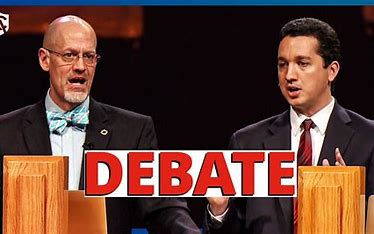
I simply wish to quote the thoughts of Catholic apologist Taylor D. Barrett on the debate between James White and Trent Horn. Taylor has been dedicated to correcting misconceptions in Catholic apologetics for years.
His opening argument is that
“If Sola Scriptura was true it would be binding on God’s people. It was never binding on God’s people. Therefore it’s false.”
This is absurd given someone at Vatican 1 could have said, “Papal Infallibility was never binding on God’s people, therefore it’s false.” Catholics in the 50s could have said, “The Assumption was never binding on God’s people, therefore it’s false.
How a Catholic apologist could frame an argument that way is just mindboggling.
What the Church says about Papal infallibility is that it was always true, not that it was always binding. Dogmas only becoming binding once they have been defined. For example, no one faults St. John Chrysostom for saying that Mary sinned, because the doctrine of her sinlessness was not yet defined – was not yet binding – when he was alive.
I think the problem here is that you are focusing on the existence of Papal authority and the objective fact that Papal authority itself always possessed binding power. But I wasn’t talking about the question of whether Papal authority was binding – I was talking about whether the *doctrine* of Papal Infallibility was binding. In Catholic theology a doctrine has to be defined for it to have binding power. This is different than the question of whether the Pope’s authority was itself binding. Plenty of devout and holy Catholic theologians at Vatican 1 knew the authority of the Pope was binding, but they were as of yet not bound to the doctrine of Papal Infallibility. They were allowed and encouraged by the Church to debate that subject at the Council. Only after the Council defined it, were they bound to believe it.
I mean, there were entire swaths of Bishops in the early Church that clearly didn’t believe in Papal Supremacy as defined by Vatican 1, as was seen in the second century controversy over the date of Easter. But that’s really besides the point. My response here wasn’t about a single particular doctrine. It was about Trent’s argument that if something wasn’t binding on God’s people (binding in the sense of – required faith and practice) that it therefore isn’t true. But this is obviously false. For example, before the Pope defined the Immaculate Conception, it wasn’t binding. Thomas Aquinas and his followers argued against it.Trent wants to say that the existence of the occasional infallible Prophet during the Old Testament proved that Sola Scriptura wasn’t true during that period.
It would be more true to say that there were times when Sola Scriptura was true, and times when it was not. There were times when a living infallible voice existed outside of Scripture, and there were times when Scripture alone existed and no infallible prophet was alive.
Trent said,
“There is no way that the only infallible rule of faith in the first and second century was Scripture, if the new testament wasn’t regarded as Scripture yet.”
I fear as I watch this debate I’m going to have to constantly frame all of Trent’s arguments as syllogisms and then show why they aren’t valid. His language, if not his reasoning, is very sloppy.
Trent cites Protestant scholars about Sola Scriptura not being a consciously recognized, or practiced, doctrine in the first two centuries, and he therefore claims “it didn’t exist then.” He doesn’t seem to be aware of the difference between something being recognized and practiced vs. it existing as true quite apart from human recognition and practice. He also assumes that everything said about following tradition necessarily implies those people thought tradition was infallible and could never err.Trent makes an argument entitled “argument from defining Scripture”
The basic idea is that if Sola Scriptura was true, there would need to be something in Scripture which tells us which books are Scripture, and that these books alone are the infallible rule.
Again, I’m just saddened and frustrated by the abject poverty in Trent’s logic. Nothing prevents God from inspiring infallible Scripture, and working to make that Scripture known to men as Scripture, apart from the additional instrumentality of some form of extra-scriptural infallibility.
Please for the love of God, Jimmy Akin , come get your boy.
Trent repeats the tired old adage, which has been disproven so many times: that, “if we depend on the Church for our knowledge of Scripture then the Church must be infallible.”
First of all, no one attains divine faith/certainty in any doctrine or truth of the faith by any sort of rational, empirical inquiry. The best those inquiries can attain is probability.
Second, nothing about the Church playing a role in making Scripture known and available, necessitates that the Church has infallibility. God can work through fallible instruments to make things available to, and known by, His people.
Trent’s “argument from Scriptural sufficiency” contains two errors, right from the start.
First, that for Scripture to be sufficient it must teach Sola Scriptura (if Sola Scriptura is true). But Scriptural sufficiency refers to salvation, not questions of ecclesiology and authority. The Catholic Church already affirms that Protestants are saved despite eccllessiological errors, so Trent can’t say “but ecclessiology and authority are essential to salvation.” They clearly aren’t. And if Trent wants to ask how we can know that, just ask him how he can know anything at all, especially something like “the Church is infallible.” The one running theme in his arguments is a complete lack of awareness regarding the Tu Quoque objection, which virtually everything he says is liable to.
Second, he begs the question re: “does Scripture implicitly teach Sola Scriptura?”
Trent completely misses the point of Mark 7.
The tradition in question was the Oral Torah, the tradition of the elders, which the Jewish people believed was infallible, equal to the written Torah, and passed down from Moses alongside the written Torah. When people would deny the authority of the Oral Torah, the Phariseess would argue that the written Torah came from the same tradition, and that it was only understood properly in that context, and that they wouldnt have, or know, the written Torah, apart from the Oral Torah.
Does that sound familiar, Trent?
Trent insinuates that Scripture isn’t sufficient because Protestants disagree how to interpret it in regards issues like loss of salvation, infant baptism, etc.
Ok, then Catholicism isn’t sufficient because Catholics disagree about the liturgy, remarriage, grace and predestination, religious liberty, blessing of homosexuals, whether Popes can be deposed, the death penalty, etc
https://www.facebook.com/TJbarrett.52689
I’m reminded of my final exam at the end of my philosophy degree. It was a list of about a couple dozen philosophies, all of which contained something self-refuting. Over and over again I just keep having to correct Trent, it’s tiring.
For another take in this same vein here is TF and Dan Chapa:
 The Council