
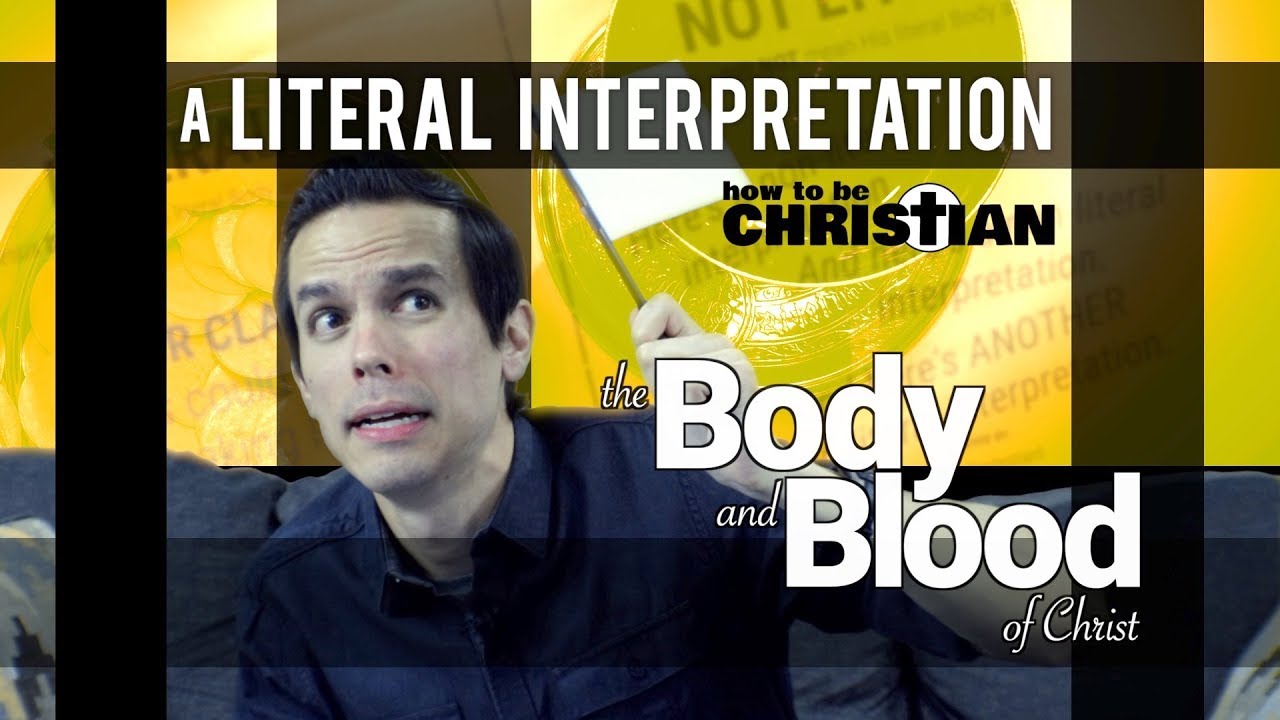
Recently, I was prompted by Ferris from “How to be Christian” to identify a flaw in his arguments supporting the notion that John 6 advocates for transubstantiation. In this discussion, I will explore the various points he raised, address broader issues with his interpretive approach, and provide clarifying comments to offer a more nuanced understanding of the text.

Section 1: The Structure of John 6 in the Greater Narrative of the Gospel of John
John 6 plays a pivotal role in the Gospel of John, not only because it is a key moment in Jesus’ public ministry but because it signals a shift in the Gospel’s theological emphasis. Just as James Gibson analyzes the structural significance of Jesus’ encounter with Nicodemus in John 3, which transitions from a focus on signs to a discussion of spiritual rebirth, John 6 similarly marks a transition from Jesus performing signs to revealing profound Christological truths. This chapter draws readers deeper into the mystery of Jesus’ identity as the Son of God, particularly emphasizing His role in offering eternal life through faith.
1.1 John’s Theological Structure: The Progressive Unveiling of Jesus’ Identity
The Gospel of John is methodically structured around an interplay of signs and discourses, with each sign pointing beyond itself to a deeper theological truth. These signs are not merely miraculous displays but deliberate revelations of Jesus’ divine authority and mission. The signs—such as turning water into wine (John 2), the healing of the nobleman’s son (John 4), and the feeding of the five thousand (John 6)—are tightly integrated into the larger narrative, with each one progressively building toward a fuller revelation of Jesus’ divine nature.
C.K. Barrett emphasizes the purposeful nature of these signs: “The signs function not as isolated acts but as gateways into deeper theological truths about Jesus’ identity. Each sign invites a reflection that transcends the material miracle and reveals a spiritual reality” (The Gospel According to St. John, p. 285). This reveals that the miracles are not standalone events; they serve as catalysts for reflection, guiding the reader from understanding Jesus as a miracle worker to recognizing Him as the Messiah and Son of God.
In John 6, the feeding of the five thousand is the fourth sign, and it serves as a foundational moment for Jesus to transition from providing for the people’s physical hunger to addressing their deeper spiritual needs. This is exemplified in the Bread of Life discourse that follows, where Jesus presents Himself as the true bread from heaven, emphasizing that eternal life can only come through belief in Him. As Blomberg notes, “The signs are not mere displays of supernatural power but function to reveal crucial aspects of Jesus’ identity, leading to a fuller understanding of His mission, as in the Bread of Life discourse” (The Historical Reliability of John’s Gospel, p. 123).
The Bread of Life discourse is not simply an exposition of the miracle but a theologically rich explanation of Jesus’ divine mission. D.A. Carson adds, “The bread of life discourse is not merely an elaboration of a miracle but a theological exposition of Jesus’ identity as the one sent by God to provide eternal life” (The Gospel According to John, p. 270). This discourse continues John’s pattern of progressing from physical signs to spiritual truths, illustrating that faith in Jesus is necessary for eternal life.
1.2 Placement within the “Signs” Section of John’s Gospel: Thematic Continuity and the Moses Motif
John 6 is situated within the Book of Signs (John 1–12), where Jesus’ miracles are interwoven with the broader theological themes of the Gospel. The feeding of the five thousand is the fourth sign in this sequence and plays a critical role in revealing Jesus’ divine authority. In this instance, Jesus meets the crowd’s physical needs by providing food, but the miracle itself is a gateway to a deeper spiritual revelation—Jesus as the bread of life, the one who can offer eternal sustenance.
C.K. Barrett reinforces the significance of this placement: “The feeding miracle is part of a wider narrative framework that links Jesus’ provision of bread to the greater provision of spiritual sustenance, culminating in His declaration as the bread of life” (The Gospel According to St. John, p. 285). This demonstrates that the structure of John’s Gospel is carefully crafted to lead the reader from surface-level understandings of miracles to the deeper Christological truths they reveal.
Carson echoes this, pointing out the Gospel’s deliberate progression from physical needs to spiritual fulfillment: “John’s narrative continually pushes beyond the miracle itself to its theological meaning—faith in Jesus as the one sent by God” (The Gospel According to John, p. 276). The feeding miracle mirrors the earlier encounters in John 3 and John 4, where Jesus shifts the focus from physical concerns (hunger or thirst) to the spiritual realities of eternal life.
This miracle also invokes the Moses typology from the Old Testament, particularly the story of manna in the wilderness (Exodus 16). Just as Moses provided bread from heaven to sustain the Israelites, Jesus now presents Himself as the true bread that offers eternal life. Bauckham draws attention to this deliberate Old Testament connection, stating: “Jesus deliberately uses the feeding of the five thousand as a symbolic act to point to the deeper reality of His divine provision, linking Himself to the Old Testament themes of manna in the wilderness” (Gospel of Glory, p. 78).
1.3 Connection with Previous Chapters: Continuity with John 3 and John 4
John 6 is not an isolated event but builds upon the themes introduced in John 3 and John 4, where Jesus emphasizes the necessity of faith in Him for eternal life. In John 3, Jesus tells Nicodemus that to see the kingdom of God, one must be born again through the Spirit, signifying the importance of spiritual rebirth. In John 4, Jesus reveals to the Samaritan woman that He is the source of living water, moving the conversation from physical thirst to spiritual fulfillment.
Bauckham highlights the continuity between these chapters, noting: “Just as Jesus moves the conversation with the Samaritan woman from physical water to living water, in John 6 He moves the crowd from physical bread to the true bread from heaven, which offers eternal life” (Gospel of Glory, p. 82). In both instances, Jesus takes the immediate, physical needs of those around Him—thirst in John 4, hunger in John 6—and uses them to reveal their deeper spiritual hunger, pointing to faith in Him as the ultimate solution.
This thematic shift is further echoed in John 3, where Jesus explains that eternal life is contingent on belief in Him. In John 3:16, Jesus declares, “For God so loved the world that he gave his one and only Son, that whoever believes in him shall not perish but have eternal life.” Similarly, in John 6:35, He promises, “Whoever comes to me will never go hungry, and whoever believes in me will never be thirsty.” These parallel declarations underscore the centrality of faith in Jesus as the pathway to eternal life.
Köstenberger connects these theological parallels across the Gospel, stating: “The central theme of eternal life through belief in Jesus runs through the entire Gospel, from John 3 through John 6 and beyond” (John: BECNT, p. 219).
1.4 Progression Toward Deeper Christological Revelations: The Bread of Life Discourse and Its Implications
John 6 also marks a turning point in how Jesus reveals Himself to the crowd. In the earlier chapters, Jesus is primarily seen as a miracle worker and teacher, but in John 6, He begins to reveal His divine nature and His sacrificial role. The Bread of Life discourse in John 6:25-71 represents a key moment where Jesus emphasizes His role as the source of eternal life, pushing the crowd—and the reader—to go beyond superficial understandings of His miracles.
C.K. Barrett highlights the Christological significance of this discourse: “The discourse on the bread of life represents a significant shift in Christological revelation, as Jesus claims to be the source of eternal life, drawing a parallel with the manna provided by God to the Israelites” (The Gospel According to St. John, p. 291). This shift is crucial because it reveals that eternal life is not something obtained through works or adherence to law, but through a relationship with Jesus, the true bread from heaven.
Carson adds that this progression is central to the narrative: “While the earlier signs draw attention to Jesus’ power and authority, the discourse on the bread of life pushes the audience to recognize that true life comes through believing in Him as the one sent by the Father” (The Gospel According to John, p. 271). This discourse challenges the crowd to move beyond their immediate physical needs and to believe in Jesus as the one who offers spiritual fulfillment and eternal life.
1.5 Connection to Future Chapters: Foreshadowing the Cross and Sacrificial Themes
John 6 not only serves as a theological turning point but also foreshadows the events that will unfold in the Passion narrative. The language used in the Bread of Life discourse, particularly Jesus’ teaching about eating His flesh and drinking His blood (John 6:51-58), prefigures His sacrificial death on the cross. This discourse is rich in Eucharistic imagery, pointing forward to the institution of the Lord’s Supper at the Last Supper, even though the Gospel of John does not explicitly record the Eucharist.
Köstenberger connects this discourse with the Passion: “The Bread of Life discourse prefigures Jesus’ impending death on the cross, as He will give His life for the salvation of the world, a theme that will culminate in the Passion narrative” (John: BECNT, p. 225). This foreshadowing is evident in John 6:51, where Jesus declares that His flesh is given “for the life of the world,” preparing the theological groundwork for His ultimate sacrifice.
Although John 6 is not explicitly Eucharistic, the imagery of eating and drinking Jesus’ flesh and blood connects to the later sacramental practice and reinforces the idea of Jesus as the source of spiritual nourishment and eternal life.
John 6, particularly in the Bread of Life discourse, emphasizes the central theme of belief in Jesus as the true and ultimate source of eternal life. While some scholars, such as Carson, propose that sacramental overtones may be present, these are not the primary focus of the passage. Instead, the text repeatedly underscores the necessity of faith in Christ for salvation, making belief the principal means by which one receives eternal life.
Any suggestion that eternal life is imparted directly through participation in sacraments is excluded by the text. The sacramental language of “eating His flesh and drinking His blood” may be understood symbolically or metaphorically as partaking in the benefits of Jesus’ life and death through faith, but the text does not support a purely sacramental or primarily sacramental interpretation that imputes eternal life directly to the Eucharist.
As Barrett notes, “The signs function not as isolated acts but as gateways into deeper theological truths about Jesus’ identity” (Barrett, The Gospel According to St. John, p. 285). The focus, therefore, is on the spiritual reality that the signs point to, not on the sacramental acts themselves as conveying eternal life. Köstenberger reinforces this interpretation, stating, “The miracle in John 6 serves as a pivotal moment where Jesus begins to explain that physical bread is only a metaphor for the deeper spiritual sustenance He offers through belief in Him” (Köstenberger, John: BECNT, p. 215).
Thus, any sacramental overtones that may be found in the discourse should be understood as symbolic pointers to the spiritual truth that eternal life is given through belief in Jesus. The lack of a Last Supper narrative in John’s Gospel further supports this point, indicating that sacramental theology is not the primary thrust of this passage. Only overtones, or possible symbolic allusions to the Eucharist, are possible here.
In conclusion, John 6 invites all readers to focus on the spiritual nourishment provided by faith in Christ, rather than relying on the sacraments as direct means of eternal life. Sacramental readings that grant overt Eucharistic symbolism are possible but not essential, and any interpretations that view the sacraments as primary or as directly conferring eternal life go beyond what the text allows.
Conclusion:
The structure of John 6 within the broader narrative of John’s Gospel plays a crucial role in transitioning the reader from Jesus’ miracles to a deeper theological understanding of His identity and mission. The chapter builds on the thematic elements of earlier chapters, such as John 3 and John 4, where the necessity of faith in Jesus is central. It marks a turning point in the Gospel’s Christological focus, moving from physical miracles to the spiritual significance of belief in Jesus as the source of eternal life.
The importance of this chapter in unfolding the deeper theological themes of the Gospel, particularly in its foreshadowing of the Passion narrative and its connection to the Eucharist. John 6 serves as a pivotal chapter that prepares readers for the culmination of Jesus’ mission in His sacrificial death and resurrection, emphasizing the central role of faith in receiving eternal life.
Section 2: The Bread of Life Discourse and Its Theological Implications
1. Midrash as a Tool for Deepening Christological Understanding
The use of midrashic exposition in John 6 helps to position Jesus within the Jewish tradition and then show how He surpasses it. Midrash is a Jewish hermeneutical method that involves interpreting and expanding on Scripture, often drawing connections between different parts of the biblical text. By employing midrashic elements, John’s Gospel draws readers into a deep theological reflection, framing Jesus as the new Moses and positioning Him as the fulfillment of Old Testament prophecies.
David Gibson suggests that the midrashic exposition of Exodus motifs in John 6 is central to understanding how Jesus’ words and actions are a deliberate reworking of Old Testament themes. He writes, “John 6 presents itself as a midrashic expansion on the Exodus story, showing that just as Moses provided manna in the wilderness, so Jesus provides eternal life, but unlike Moses, Jesus’ bread offers more than physical sustenance—it is eternal” (Gibson, John and Wordsworth, p. 28).
This midrashic interpretation highlights Jesus’ divine identity, as He provides the true bread that satisfies spiritual hunger. The midrashic exposition of the manna miracle not only recalls God’s covenant faithfulness to Israel but also amplifies Jesus’ role as the fulfillment of the Prophet-like-Moses typology found in Deuteronomy 18:15-22. This shows how Jesus fulfills the role of prophet, but also exceeds Moses by providing eternal life.
2. Midrash and the Bread of Life Discourse
The midrashic interpretation in John 6 is particularly valuable when analyzing Jesus’ claim to be the bread of life. In John 6:31, the crowd refers to Exodus 16, where manna is provided by God, saying, “Our ancestors ate the manna in the wilderness; as it is written: ‘He gave them bread from heaven to eat.’” Jesus responds by reinterpreting the manna narrative in light of His own mission. While manna fed the Israelites temporarily, Jesus as the true bread from heaven provides eternal life.
Gibson points out that Jesus’ midrashic response demonstrates how “the locus of importance shifts from the gift of bread to the giver—Jesus Himself. In providing spiritual sustenance, Jesus is revealing that He is the one sent from heaven, offering life that goes beyond physical nourishment” (Gibson, John and Wordsworth, p. 29). By using midrashic exposition, John’s Gospel illustrates that the crowd’s literal interpretation of manna is incomplete, and only by recognizing Jesus as the spiritual fulfillment of that bread can they receive eternal life.
3. The Mosaic Typology and Its Christological Fulfillment
The Mosaic typology within the midrashic framework enhances the Christological focus of John 6. Scholars like P. Anderson and M. Stibbe have argued that the midrashic parallels between Moses and Jesus, especially in the feeding miracle, reveal how Jesus is presented as a new Moses who brings a new covenant. Stibbe describes this as “penetrating the hidden ‘Mosaic’ of Jesus’ words and actions,” pointing to how the Gospel is structured around a midrashic reinterpretation of Moses’ role (Gibson, John and Wordsworth, p. 32).
The key difference, as Gibson explains, is that while Moses was a mediator of temporary sustenance, Jesus is both the mediator and substance of eternal life: “Where Moses delivered manna, a temporary provision, Jesus offers Himself, the bread that endures to eternal life” (John and Wordsworth, p. 33). The midrashic parallels emphasize that Jesus doesn’t merely recapitulate Moses’ role—He transcends it.
4. The Midrashic Shift to Christ’s Sacrificial Death
Gibson’s insights also help to clarify the transition from bread as physical sustenance to bread as Jesus’ flesh, a move that confuses many interpreters. As Gibson explains, “The midrashic development in John 6 shifts the reader’s focus from Jesus’ provision of bread to the ultimate provision of His flesh in His sacrificial death” (Gibson, John and Wordsworth, p. 35). This transition is crucial because it shows that the true fulfillment of the manna is not just in Jesus’ ministry but in His sacrifice on the cross. The metaphor of eating flesh and drinking blood becomes a Christological proclamation about Jesus’ death rather than a sacramental act.
Thus, the midrashic elements in John 6 invite readers to reinterpret the Exodus narrative in light of Jesus’ death and resurrection. Just as the manna came from heaven to sustain the Israelites, Jesus’ flesh—given in death—comes from heaven to provide eternal life for those who believe.
5. A Critique of Sacramentalism through Midrash
One of the most important contributions of midrashic interpretation in John 6 is that it challenges a purely sacramental reading of the text. Scholars like P.M. Casey argue for a Eucharistic climax in John 6:51-58, but David Gibson contends that the midrashic exposition challenges this view by focusing on faith in Jesus’ death rather than ritual participation.
Gibson critiques Casey’s argument that John 6 gradually expounds a sacramental theology, pointing out that the midrashic nature of the discourse actually draws attention away from the Eucharist and toward Christ’s person and work. He writes, “John’s midrashic exposition of Exodus motifs suggests that the primary emphasis is on Jesus as the source of eternal life, not on the ritual act of eating and drinking in the Eucharist” (John and Wordsworth, p. 37).
Gibson supports Dunn’s interpretation that John 6:63 serves as the key to unlocking the metaphorical meaning of the passage. As Dunn suggests, “the life-giving consumption of the Son of Man refers to the reception of the Spirit of the exalted Jesus. It is the Spirit who gives life, not the sacrament itself” (J.D.G. Dunn, Jesus Remembered, p. 644). This interpretation, supported by Gibson’s midrashic analysis, confirms that the spiritual focus of John 6 is about faith in Jesus’ sacrificial death, rather than ritual consumption.
Conclusion: Midrash as a Tool for Christological Emphasis
In conclusion, the midrashic elements in John 6 enrich the theological depth of the Bread of Life discourse by connecting it to the Old Testament and demonstrating how Jesus fulfills and transcends the Mosaic typology. These midrashic motifs help readers to see Jesus not only as the provider of spiritual sustenance but also as the sacrificial lamb who offers eternal life through His death. The midrashic approach challenges a literal Eucharistic reading, emphasizing instead the necessity of faith in Jesus’ sacrificial death as the true means of receiving eternal life.
As David Gibson concludes, “The midrashic framework of John 6 shows that the true bread from heaven is not a sacramental element but the person of Jesus Christ, who gives His life for the world. Faith in His sacrifice, not participation in the Eucharist, is what brings eternal life” (John and Wordsworth, p. 40).
The Bread of Life discourse in John 6:25–71 is one of the most theologically dense passages in the Gospel of John. Jesus uses rich symbolism to communicate profound truths about His identity, His mission, and the necessity of faith for eternal life. At the center of this passage is the tension between literal and metaphorical interpretations, particularly surrounding Jesus’ statements about eating His flesh and drinking His blood. While sacramental overtones related to the Eucharist are often highlighted by scholars, a closer examination reveals that faith in Jesus’ sacrificial death is the dominant theme. The Christological focus—centered on who Jesus is and what He offers—outweighs any purely sacramental reading, stressing the necessity of embracing His sacrifice through faith.
2.1 Jesus as the Bread of Life: The Fulfillment of Old Testament Imagery
Jesus’ declaration in John 6:35, “I am the bread of life. Whoever comes to me will never go hungry, and whoever believes in me will never be thirsty,” serves as a key theological moment where He positions Himself as the fulfillment of Old Testament motifs, particularly the provision of manna in the wilderness (Exodus 16). The manna, a physical sustenance that temporarily fed the Israelites, is contrasted with Jesus, the bread of life, who offers spiritual sustenance leading to eternal life.
David Gibson emphasizes the significance of this transition from the Old Covenant to the New Covenant, explaining that Jesus “transcends the temporary provision of manna by offering Himself as eternal sustenance” (Gibson, John and Wordsworth, p. 25). The shift from a physical to a spiritual fulfillment is echoed by Andreas Köstenberger, who writes, “Jesus identifies Himself as the fulfillment of the Old Testament symbol of manna, declaring that He offers not just physical sustenance but spiritual nourishment that leads to eternal life” (John: BECNT, p. 215).
In line with Gibson and Köstenberger, D.A. Carson underscores that this metaphorical bread points beyond the physical: “Jesus moves from the miracle of feeding the five thousand to a deeper reflection on His identity as the bread of life, challenging the crowd to move beyond their immediate physical needs to recognize the spiritual provision He offers” (The Gospel According to John, p. 275).
Intertextually, this imagery of bread in John 6 recalls several Old Testament motifs beyond the manna in Exodus. The feeding of the multitudes also has echoes of Elisha’s miraculous feeding of 100 men with 20 loaves of barley (2 Kings 4:42–44). These Old Testament allusions frame Jesus’ miraculous feeding of the five thousand as part of the prophetic tradition, but with a Christological twist—Jesus is not merely a prophet like Moses or Elisha; He is the ultimate source of life. This typological fulfillment highlights Jesus as the greater Moses, whose provision of eternal life far exceeds the temporary sustenance provided by manna.
2.2 The Necessity of Faith in Jesus for Eternal Life
A dominant theme in the Bread of Life discourse is the necessity of faith in Jesus as the pathway to eternal life. Throughout the discourse, Jesus emphasizes that coming to Him and believing in Him are the means of receiving eternal life. This is made explicit in John 6:47: “Very truly I tell you, the one who believes has eternal life.” This theological emphasis on faith parallels John 3:16, reinforcing that eternal life is granted not through physical acts but through belief in Jesus as the Son of God.
David Gibson, highlighting the centrality of faith, notes, “The Bread of Life discourse is not primarily about sacramental acts but about the necessity of recognizing Jesus as the one who gives life and responding to Him in faith” (Gibson, John and Wordsworth, p. 28). Craig Blomberg similarly comments, “The repeated call to believe in Jesus as the source of eternal life reflects the central Johannine theme that faith, not works or external rites, is the means of salvation” (The Historical Reliability of John’s Gospel, p. 127).
This emphasis on faith reflects the broader theological framework of John’s Gospel, which consistently elevates belief in Jesus as the critical response to His self-revelation. The audience in John 6, however, struggles to grasp the shift from physical bread to the spiritual nourishment that Jesus offers. Jesus urges the crowd to move beyond their immediate physical desires, echoing His earlier encounter with the Samaritan woman at the well (John 4), where He offers “living water” as a metaphor for eternal life.
This theological development underscores a broader Johannine theme: Jesus consistently reframes material realities to reveal deeper spiritual truths. In both John 4 and John 6, Jesus calls for a faith that transcends physical provision, pointing instead to a spiritual relationship with Him as the giver of eternal life.
2.3 Eating His Flesh and Drinking His Blood: Metaphor or Sacramental Language?
The most debated portion of the discourse is Jesus’ statement in John 6:53–56: “Unless you eat the flesh of the Son of Man and drink His blood, you have no life in you. Whoever eats my flesh and drinks my blood has eternal life.” This language has led many scholars to interpret the passage as a reference to the Eucharist. However, while there are sacramental overtones, the primary emphasis remains on the necessity of faith in Jesus’ sacrificial death.
David Gibson challenges the notion that John 6:53–56 primarily refers to the Eucharist, arguing that “the language of eating flesh and drinking blood is metaphorical, pointing to the need for believers to internalize Jesus’ sacrifice through faith” (Gibson, John and Wordsworth, p. 30). Carson echoes this view, noting that “while there may be Eucharistic overtones, the dominant theme remains one of faith. The eating and drinking metaphorically represent coming to Christ and believing in Him” (The Gospel According to John, p. 287).
Intertextually, the imagery of eating flesh and drinking blood connects to the Old Testament prohibition against consuming blood (Leviticus 17:10–14). Jesus’ language would have been shocking to His Jewish audience, who were well aware of the sacred prohibition against consuming blood. Yet, Jesus deliberately uses this provocative metaphor to emphasize the necessity of participating in His sacrificial death. As Blomberg explains, “Jesus is speaking not about physical consumption but about faith in His forthcoming death as the ultimate atoning sacrifice” (The Historical Reliability of John’s Gospel, p. 132).
This sacrificial imagery further deepens the theological significance of Jesus’ mission. Eating flesh and drinking blood in John 6 is not a call to ritual consumption but a metaphorical invitation to believe in the salvific power of Jesus’ death on the cross. Just as bread and drink sustain physical life, Jesus’ flesh and blood sustain eternal life for those who believe.
2.4 Excluding a Purely Sacramental Interpretation
While sacramental language is present in John 6, the passage does not support a purely sacramental interpretation. Throughout the discourse, Jesus emphasizes that eternal life comes through faith, not through the literal act of consuming bread and wine. The metaphorical language of eating and drinking points to the spiritual reality of faith in Jesus as the means to salvation.
David Gibson critiques scholars like P.M. Casey, who argue for a sacramental climax in John 6:51–58, noting that such interpretations often arise from ideological commitments. Gibson writes, “Casey’s sacramental reading overlooks the fact that John 6 is intensely Christological, focusing on the person and work of Jesus rather than on ritual acts” (Gibson, John and Wordsworth, p. 32).
This critique is supported by C.K. Barrett, who stresses that “The signs function not as isolated acts but as gateways into deeper theological truths about Jesus’ identity” (The Gospel According to St. John, p. 285). The feeding of the five thousand and the Bread of Life discourse direct the audience to recognize Jesus as the source of eternal life rather than focusing on ritualistic acts.
Moreover, the absence of a Last Supper narrative in John’s Gospel strongly suggests that the emphasis in John 6 is not sacramental. Andreas Köstenberger notes, “The absence of a Last Supper institution in John highlights that the Gospel’s focus is on faith as the means of receiving eternal life, rather than on the sacraments themselves” (John: BECNT, p. 225). John’s exclusion of a formal Eucharistic narrative reinforces the idea that Jesus’ words in John 6 primarily point to the necessity of faith rather than the literal consumption of sacramental elements.
2.5 Faith in the Sacrifice of Christ: The True Bread from Heaven
The ultimate focus of the Bread of Life discourse is on Jesus’ impending sacrificial death. In John 6:51, Jesus declares, “This bread is my flesh, which I will give for the life of the world.” This statement points directly to His crucifixion, emphasizing that His death is the means by which He offers eternal life to those who believe.
David Gibson stresses that “the language of eating flesh and drinking blood points to the believer’s participation in Jesus’ death through faith” (Gibson, John and Wordsworth, p. 34). Carson similarly emphasizes that “Jesus’ self-offering is the means by which He becomes the bread of life. His death on the cross is the ultimate fulfillment of the imagery in this discourse” (The Gospel According to John, p. 290).
The Christological focus of the passage is clear: faith in Jesus’ sacrificial death is the key to eternal life. The eating and drinking language is metaphorical, reflecting the spiritual act of believing in Jesus and accepting His death as the atoning sacrifice for sin. This theological focus aligns with the broader message of John’s Gospel, which repeatedly calls for faith in Jesus as the Son of God who gives eternal life to those who believe.
Conclusion: The Bread of Life Discourse as a Call to Faith, Not Sacramentalism
In John 6, Jesus reveals Himself as the bread of life, drawing on Old Testament imagery to underscore His role as the one who offers eternal life through His sacrificial death. While the language may carry Eucharistic overtones, the dominant theme is faith in Jesus as the means of receiving eternal life. The passage’s focus on belief in Jesus, rather than on ritual consumption of sacramental elements, underscores the spiritual nature of salvation.
Section 3: The Logical Structure of John 6
The Bread of Life discourse in John 6 is not only rich in theological meaning but also structured with logical coherence. Jesus gradually builds a layered argument, starting with the physical sign of feeding the five thousand and culminating in His call to faith in His sacrificial death. This logical progression reveals a careful interplay between physical symbols and spiritual truths. By analyzing the logical flow of the discourse, we can further illuminate how Jesus defends and develops His claims, addressing misunderstandings and objections along the way.
3.1 The Argument from Physical Signs to Spiritual Realities
The discourse begins with a focus on the physical act of feeding the five thousand, but it quickly transitions into a discussion of the spiritual reality to which the miracle points. In John 6:26, Jesus corrects the crowd’s misunderstanding: “Very truly I tell you, you are looking for me, not because you saw the signs I performed but because you ate the loaves and had your fill.” Here, Jesus establishes the foundational premise: the signs are meant to reveal something beyond physical provision. The crowd is focused on material needs, but Jesus wants them to grasp the deeper significance of His identity.
D.A. Carson remarks on this logical move: “The people, in their eagerness to secure more bread, miss the point that the sign was meant to direct them to Jesus as the true source of eternal life” (The Gospel According to John, p. 275). Jesus sets up the argument by first shifting their attention from the sign to what the sign signifies—Himself as the bread of life.
This sets the trajectory for the entire discourse: the logic moves from the material (the bread that feeds temporarily) to the spiritual (the bread that feeds eternally). By using the physical miracle of feeding the crowd as a starting point, Jesus brings His audience into the deeper theological implications of His mission.
3.2 Transition from Physical Bread to Spiritual Nourishment
In John 6:27, Jesus continues this line of reasoning: “Do not work for food that spoils, but for food that endures to eternal life, which the Son of Man will give you.” The logical structure here is a comparison between two types of sustenance: one that is temporary (physical bread) and one that leads to eternal life (spiritual bread). Jesus establishes a dichotomy between temporal, perishable nourishment and the lasting nourishment He offers, further deepening His argument that He, not physical bread, is the true source of life.
This logical transition is key to understanding the discourse. Jesus isn’t rejecting the importance of physical sustenance but is using it as an analogy for a greater spiritual reality. The crowd’s misunderstanding lies in their fixation on the physical, while Jesus wants to shift their focus to the eternal. As David Gibson explains, “The movement from physical to spiritual bread is the key to understanding the entire discourse. Jesus invites His listeners to realize that their deeper need is not for bread that sustains life temporarily, but for the bread that leads to eternal life” (John and Wordsworth, p. 31).
3.3 Faith as the Logical Means to Eternal Life
The central element of Jesus’ argument in the discourse is that faith in Him is the means to receiving eternal life. In John 6:47, Jesus makes this point explicit: “Very truly I tell you, the one who believes has eternal life.” This statement forms a logical conclusion to the premise that Jesus is the bread of life. If Jesus is the true bread that offers eternal sustenance, then the logical response to Him must be belief, not merely physical consumption.
This emphasis on faith also fits within the broader Johannine theme, where belief in Jesus is consistently portrayed as the means of salvation (cf. John 3:16). The connection between Jesus’ identity as the bread of life and the necessity of faith is inescapable: faith is the act of receiving the life He offers. This presents a logical necessity: only by believing in Jesus can one partake in the eternal life He provides.
Blomberg notes, “The structure of the discourse demonstrates that faith is the indispensable requirement for receiving eternal life. The act of believing in Jesus is metaphorically connected to eating and drinking, underscoring the internal, personal nature of the faith response” (The Historical Reliability of John’s Gospel, p. 130).
3.4 Addressing Objections and Clarifying Misunderstandings
Throughout the discourse, Jesus addresses objections from His audience, often using their misunderstandings to further clarify His message. In John 6:41-42, the Jews object to Jesus’ claim that He is the bread that came down from heaven, saying, “Is this not Jesus, the son of Joseph, whose father and mother we know? How can He now say, ‘I came down from heaven’?”
Jesus responds by appealing to the divine initiative in salvation, declaring, “No one can come to me unless the Father who sent me draws them” (John 6:44). The logic here is that faith in Jesus is not merely a matter of human will or understanding—it is a response to the Father’s work. The audience’s objection, based on their knowledge of Jesus’ earthly origins, is answered by shifting the focus to the heavenly, divine source of Jesus’ mission and the Father’s drawing of believers.
David Gibson observes that this response addresses the logical impasse the audience faces: “The crowd cannot reconcile Jesus’ claim to divine origin with their knowledge of His human background. Jesus responds by emphasizing the Father’s role in drawing people to Him, thus moving the discussion from the earthly to the divine” (John and Wordsworth, p. 35). This serves as a crucial turning point in the argument, where the discourse shifts to focus more explicitly on the necessity of divine action in bringing people to faith.
3.5 The Logic of Sacrifice and Eternal Life
As the discourse progresses, Jesus introduces the concept of His sacrificial death as the means by which eternal life is granted. In John 6:51, He states, “This bread is my flesh, which I will give for the life of the world.” This marks a significant development in the logical structure of the discourse: Jesus connects the metaphor of bread with His impending death, showing that His flesh—given in sacrifice—is the true bread that offers eternal life.
The logic of this connection is clear: just as bread sustains physical life, Jesus’ sacrificial death sustains eternal life. Those who partake in His sacrifice (metaphorically through faith) are given life. This is further reinforced in John 6:53-54, where Jesus says, “Unless you eat the flesh of the Son of Man and drink his blood, you have no life in you. Whoever eats my flesh and drinks my blood has eternal life.”
Carson explains this connection: “Jesus’ self-giving death is at the heart of His identity as the bread of life. The act of eating His flesh and drinking His blood is a metaphorical way of describing the faith that internalizes the benefits of His sacrificial death” (The Gospel According to John, p. 289).
3.6 The Logical Consistency of the Discourse: Spirit and Life
The climax of the discourse occurs in John 6:63, where Jesus declares, “The Spirit gives life; the flesh counts for nothing. The words I have spoken to you—they are full of the Spirit and life.” Here, Jesus resolves the tension between the physical and spiritual interpretations of His message. The “flesh” He refers to is not literal physical flesh but the spiritual reality of His words and sacrificial mission.
This statement reinforces the earlier emphasis on faith, showing that true life comes from the Spirit and is accessed through faith in Jesus’ words. The logical consistency of the discourse is maintained: faith in Jesus, as the bread of life, is the means of receiving eternal life, and this faith is spiritually driven, not physically enacted through ritualistic acts of eating and drinking.
David Gibson comments on this final statement: “Jesus’ conclusion about the Spirit giving life is a logical summation of the entire discourse. The life that Jesus offers is spiritual and eternal, accessed through faith in His sacrifice, not through literal consumption of His flesh” (John and Wordsworth, p. 37).
Conclusion: The Logical Coherence of the Bread of Life Discourse
The Bread of Life discourse in John 6 is marked by a tightly constructed logical progression. Beginning with the physical miracle of feeding the five thousand, Jesus leads His audience into a deeper theological understanding of His identity and mission. The logic of the discourse moves from the material to the spiritual, emphasizing that faith in Jesus’ sacrificial death is the means by which one receives eternal life.
Each objection from the audience is met with a carefully structured response that clarifies Jesus’ identity and reinforces the necessity of divine action in bringing people to faith. By the end of the discourse, Jesus has presented a coherent argument: He is the bread of life, sent from heaven to offer eternal life through His death, and faith is the only means by which this life is received.
This logical structure not only reveals the theological depth of the discourse but also reinforces its Christological focus. The call to faith, not sacramentalism, is the central message, and the discourse presents a compelling argument for Jesus’ identity as the Son of God and the source of eternal life.
Step 1: Clarifying the Terms in Context
John 6:26–29
Jesus introduces the concept of eternal life as something distinct from temporary, physical sustenance. In verse 26, He tells the crowd that they are seeking Him because of the physical bread they ate, not because they saw the sign. Jesus encourages them to work for the food that endures to eternal life (v. 27), which He, the Son of Man, will give them.
- R: Physical bread is temporary.
- P: Jesus offers something greater—spiritual sustenance that leads to eternal life.
- Q: The people ask, “What must we do to do the works God requires?” (v. 28), to which Jesus answers, “The work of God is to believe in the one He has sent” (v. 29). Thus, faith is introduced as the necessary means to eternal life.
The logical structure here sets up the relationship between physical sustenance and spiritual sustenance:
- R → P → Q:
- R: The crowd seeks physical bread.
- P: Jesus offers spiritual, eternal bread.
- Q: Belief in Jesus is the path to obtaining this spiritual sustenance.
Step 2: Addressing the Next Logical Step
John 6:30–33
The crowd responds by asking for a sign, referencing the manna their ancestors ate in the wilderness. Jesus responds by explaining that it wasn’t Moses who gave the bread from heaven, but His Father. He then declares, “The bread of God is the bread that comes down from heaven and gives life to the world” (v. 33).
- R: The crowd interprets the manna as the bread from heaven.
- P: Jesus reveals that the true bread from heaven is Himself, not physical manna.
- Q: This bread (Jesus) provides eternal life.
The people misunderstand the nature of the bread Jesus is offering. They are fixated on literal bread (sacramental thinking), but Jesus is revealing a spiritual truth about faith in Him as the path to eternal life.
Step 3: Extending the Logical Structure
John 6:35–40
Here Jesus explicitly declares, “I am the bread of life. Whoever comes to me will never go hungry, and whoever believes in me will never be thirsty” (v. 35). He further states that He has come to do the Father’s will, which is that everyone who looks to the Son and believes in Him will have eternal life (v. 40).
- R: Jesus declares Himself the bread of life.
- P: Coming to Jesus and believing in Him leads to eternal life.
- Q: This belief results in being raised up at the last day (v. 40).
The structure here is the same:
- R → P → Q:
- R: Jesus offers Himself as the bread of life.
- P: Belief in Him is the means by which one partakes of this bread.
- Q: Eternal life is the result.
This reinforces the connection between belief and eternal life, not participation in a sacrament. The emphasis remains on faith as the means of “eating” the bread of life.
Step 4: Clarifying the Nature of “Eating” and “Drinking”
John 6:51–58
This section introduces the controversial language about eating Jesus’ flesh and drinking His blood. Many interpret this sacramentally, but the larger context and logical structure suggest a metaphorical meaning that emphasizes faith in Jesus’ sacrificial death.
- R: Jesus offers His flesh as the bread that will be given for the life of the world (v. 51), referencing His impending crucifixion.
- P: Eating His flesh and drinking His blood are metaphors for faith in His sacrificial death.
- Q: Those who do this (believe in His death) will have eternal life and will be raised up on the last day (v. 54).
The language of eating and drinking is a metaphor for the complete acceptance and internalization of Jesus’ death. Thus, the logical structure remains:
- R → P → Q:
- R: Jesus offers His body and blood (sacrifice).
- P: Faith in this sacrifice (metaphorical eating/drinking).
- Q: The result is eternal life and resurrection.
Step 5: The Father’s Role in Drawing and Teaching
John 6:44–45
Step 1: Premise 1 – The Father’s Drawing Leads to Coming
John 6:44 states:
“No one can come to me unless the Father who sent me draws him. And I will raise him up on the last day.”
This verse establishes the foundation: no one can come to Christ unless the Father draws them. Here, R stands for the Father’s drawing, and P stands for the person coming to Jesus. The relationship is thus:
R → P
Where R is the Father’s drawing and P is the individual’s act of coming to Jesus.
This premise conveys a causal relationship: if the Father draws someone, then that person will come to Christ. The act of drawing ensures that the individual will respond by coming to faith in Jesus. This drawing is not merely an invitation but a sovereign act of God that leads to an inevitable result: the person comes to Christ and is promised resurrection (“I will raise him up on the last day”).
Premise 2 – Teaching and Learning Lead to Coming
John 6:45 follows:
“It is written in the Prophets: ‘They will all be taught by God.’ Everyone who has heard and learned from the Father comes to me.”
This verse expands the process by introducing the elements of teaching and learning. It makes it clear that those who hear and learn from the Father will come to Jesus. In logical terms:
T ∧ L → P
Where T is the person being taught by the Father, L is the person learning from the Father, and P is coming to Jesus.
This suggests that teaching and learning are also essential components in coming to Jesus. Only those who have been taught by God and have learned (understood, internalized) the teaching will respond in faith. This teaching is not merely informational but transformational—it produces in the hearer a willingness and ability to come to Jesus.
Synthesis of Drawing and Teaching
Now, to combine the two premises:
Premise 1:
R → P
If the Father draws someone, they will come to Christ.
Premise 2:
T ∧ L → P
If someone is taught and learns from the Father, they will come to Christ.
Logical Synthesis:
Since both drawing and teaching/learning lead to the same outcome (coming to Christ), we must conclude that the drawing and teaching/learning are not separate processes but rather are intertwined. In other words, those who are drawn are also those who are taught and have learned.
Thus, we have the following synthesis:
R → T ∧ L → P
Where drawing leads to teaching and learning, which leads to coming.
This synthesis reveals that the Father’s drawing occurs through the act of teaching, and those who are drawn are simultaneously being taught and learning. The two processes cannot be separated. The outcome (coming to Christ) is only possible because of both divine drawing and teaching.
Precluding a Sacramental Interpretation
The logical structure of John 6:44–45 makes it clear that faith—as the outcome of drawing, teaching, and learning—is the central mechanism by which one comes to Christ. This understanding precludes a purely sacramental view of the passage, for several reasons:
- Faith, Not Ritual, Is the Essential Response:
Nowhere in this sequence is there an implication that coming to Christ is mediated by ritual acts such as the Eucharist. The emphasis is entirely on the internal process of hearing, learning, and being drawn by the Father. It is not through external means, such as sacraments, that one comes to Christ but through faith in the revealed truth of God. - Sacramental Acts Do Not Fit the Flow of the Argument:
If the passage were about sacramental acts, one would expect an external action (such as participation in the Eucharist) to be emphasized as necessary for coming to Jesus. However, the language is entirely focused on an internal spiritual process of drawing, hearing, learning, and believing. These are intellectual and spiritual responses, not physical actions. Thus, any interpretation that emphasizes sacraments over faith is out of alignment with the passage’s logic. - The Result of Drawing and Teaching Is Faith, Not Sacramental Participation:
John 6:44–45 repeatedly highlights faith as the endpoint of the Father’s action. The Father draws individuals to Christ by teaching them, and those who hear and learn come to Christ. The coming that results from this process is not described as an act of ritual but as an act of believing.
Addressing Hypothetical Objections
Objection 1: Can Someone Be Drawn Without Being Taught?
One could argue that the Father might draw someone without teaching them, but this objection fails in light of the passage’s logic. If R → P (drawing leads to coming) and T ∧ L → P (teaching and learning lead to coming), then R and T ∧ L must be related. Those who are drawn are those who are taught, and those who are taught are those who come. Thus, drawing apart from teaching makes no sense within the flow of the text.
Objection 2: Can Someone Be Taught and Not Come?
Similarly, some might argue that one could be taught by the Father but not come to Christ. However, John 6:45 refutes this idea, as it explicitly states that everyone who is taught and has learned will come to Christ. The process is comprehensive and complete: the Father’s teaching is effective in bringing those He draws to faith.
More Issues:
In John 6:44-45, Jesus provides a clear explanation of how individuals come to Him: through the divine drawing and teaching of the Father. This passage states, “No one can come to me unless the Father who sent me draws him. And I will raise him up on the last day” (John 6:44). Jesus follows this by quoting the Old Testament: “It is written in the Prophets: ‘They will all be taught by God.’ Everyone who has heard and learned from the Father comes to me” (John 6:45). These verses together present a cohesive process: those who are drawn by the Father are also taught, hear, and learn from Him, and as a result, come to Christ.
Clarifying the Terms in Context
The connection between drawing (John 6:44) and being taught (John 6:45) is clear: Jesus emphasizes that the Father draws people to Christ through teaching. The natural reading of these verses suggests that the drawing and teaching are not separate actions but are parallel and complementary processes. Those who are drawn are taught by the Father, and those who learn from this divine teaching come to Jesus.
Addressing the Objection
An objection arises from the interpretation that not all who are drawn by the Father are necessarily taught. This view attempts to separate the acts of drawing and teaching, implying that God may draw some people who are not fully taught, or that those who are taught may not respond in faith. This objection, however, creates significant logical and theological inconsistencies.
Logical Consistency: If drawing leads to coming to Christ (John 6:44) and teaching, hearing, and learning lead to coming to Christ (John 6:45), then drawing and teaching must be integrally related. Jesus consistently stresses that those who come to Him are those who have been drawn and taught by the Father. Therefore, a failure to come implies that someone was neither drawn nor taught in the way Jesus describes.
Jesus’ Emphasis on Learning: Jesus reinforces this by quoting Isaiah in John 6:45: “They will all be taught by God.” This highlights that learning from the Father—hearing and responding to His teaching—is an essential part of coming to Christ. The structure of the passage leaves no room for a subset of people who are drawn but not taught. Divine drawing is always connected to teaching.
Conclusion of the Argument: Jesus concludes with, “Everyone who has heard and learned from the Father comes to me” (John 6:45). This implies that all those drawn must have been taught and learned, as the result is always coming to Christ. If someone does not come to Christ, it is because they were neither drawn nor taught in the effectual way Jesus describes.
Extending the Logical Analysis
The relationship between drawing and teaching can be formalized logically:
Premise 1: If the Father draws someone, that person will come to Jesus (John 6:44). R→P
Where R is the Father drawing, and P is the person coming to Jesus.
Premise 2: If someone is taught and learns from the Father, they will come to Jesus (John 6:45). T∧L→P
Where T is the person being taught by the Father, and L is the person learning from the Father.
Premise 3: Those who come to Jesus are those who have been drawn by the Father, and those who have been drawn are those who have been taught and learned from the Father.
From Premise 1: R→P
From Premise 2: T∧L→P
Therefore, those who are drawn are also those who are taught and have learned.
This logical structure demonstrates that it is impossible to separate drawing from teaching. The process of coming to Christ involves both divine drawing and hearing and learning from the Father. These elements are inseparable, as both lead to the same result: coming to Christ.
Addressing the Hypothetical Separation
If someone were to argue that divine drawing could occur without teaching, several issues arise:
- What is the nature of drawing apart from teaching? Without teaching, what would divine drawing consist of? Jesus indicates that the Father’s drawing is mediated through teaching and revelation. If this is removed, the concept of drawing becomes vague and unclear within the context of John 6.
- How does one come to Christ without being taught? If drawing occurs without teaching, what cognitive or spiritual response leads the person to Christ? Jesus emphasizes that coming to Him involves hearing and learning from the Father, implying that understanding and faith are essential components.
- What would happen to someone drawn but not taught? If a person is drawn but not taught, would they fail to come to Christ? This contradicts the promise of John 6:44, which states that all who are drawn will come to Jesus and be raised up on the last day.
The Objection That One Can Be “Taught” Without “Hearing”
Another possible objection is the claim that a person can be taught by God but not truly “hear” in the sense Jesus describes. This objection suggests a distinction between external instruction and internal, spiritual hearing. In the context of John 6, however, hearing is not merely physical listening but involves internal reception and understanding. Those who “hear” in this sense are those who internalize God’s teaching and respond in faith.
- Understanding “Taught” and “Hearing”: In John 6:45, Jesus equates being “taught by God” with hearing and learning. The teaching Jesus refers to is not merely external; it is effectual teaching that penetrates the heart and mind, leading to genuine understanding. Hearing, in this context, implies more than physical hearing—it involves a response of faith.
- The Logical Implication of Teaching and Hearing: To suggest that someone can be taught by God but not hear undermines the process Jesus describes. If someone is truly taught by the Father, they will hear and learn, as these elements are inseparable in divine teaching. If someone does not hear, it indicates that they were not taught in the way Jesus describes.
T→(H∧L)
Teaching leads to hearing and learning. Therefore, separating teaching from hearing or learning contradicts the flow of Jesus’ argument.
Conclusion: Teaching, Hearing, and Learning Are Inseparable in John 6
The teaching Jesus refers to in John 6 is effectual and leads to hearing, learning, and coming to Him. Any attempt to separate these processes disrupts the logical flow of the passage. Those who are drawn by the Father are taught by Him, and those who are taught by the Father will hear, learn, and come to Christ. The theological and logical structure of John 6 makes it clear that teaching and hearing are inseparable, and divine teaching always produces the result of faith and coming to Christ. This emphasis on faith in Jesus, rather than participation in sacraments or mere outward actions, underscores the central message of the passage.
Conclusion: The Logical Structure Emphasizes Faith Over Sacraments
The logical structure of John 6:44–45 demonstrates that faith—not sacramental participation—is the primary means by which individuals come to Christ. The Father’s drawing and teaching are not separate processes but are part of the same divine action that leads to faith. Teaching and learning are how the Father draws people, and the result is that they come to Jesus in faith.
This analysis precludes a sacramental view of the passage, as the focus is entirely on the internal transformation that occurs through the Father’s drawing and teaching. The Eucharist, while significant in Christian theology, is not the subject of this passage; rather, the emphasis is on the faith response to divine teaching. This conclusion aligns with the broader theme of John’s Gospel, where believing in Jesus is consistently portrayed as the means of receiving eternal life.
Therefore, to interpret John 6 as primarily about sacramental participation would ignore the clear logical progression that ties faith to the act of coming to Christ and the divine drawing and teaching that precede it.parable in the flow of John 6, as both lead to the same conclusion: coming to Christ.
Step 6: Conclusion of the Logical Structure of John 6:25–65
The structure throughout this chapter repeatedly shows that faith is the means by which one partakes of the “bread of life.” Even when sacramental language is introduced, the broader context clarifies that belief in Jesus’ person and work—particularly His death—is the key to eternal life.
- R → P → Q: The overarching structure in every section points to:
- R: Jesus offers Himself as the source of life.
- P: Belief in Him is the means of receiving this life.
- Q: The result is eternal life, not based on sacraments but on faith.
This logical structure precludes a sacramental interpretation of the chapter. The consistent message is that eternal life is obtained through belief in Jesus’ sacrifice, not through the physical act of eating or drinking as in the Eucharist. Sacramental interpretations are shown to be secondary, symbolic representations of the faith that truly brings eternal life.
Old Testament Parallels
1. Passover and Manna as Prefigurations
Ferris links the Passover and the provision of manna in the wilderness with the Eucharistic teachings in John 6. He suggests that these Old Testament events prefigure the Last Supper and the transformation of bread and wine into the body and blood of Christ. However, there are critical differences:
- Passover: The lamb’s blood was used for protection and not consumed, which diverges from the concept of consuming Christ’s blood in the Eucharist.
- Manna: While it was indeed supernatural sustenance from God, it remained bread and did not undergo any substance transformation, unlike the claims of transubstantiation.
These distinctions indicate that while the events may serve as spiritual foreshadowing, they do not directly support the specific mechanics of transubstantiation as Ferris suggests.
Therefore, Ferris (from YouTube’s “How to be Christian”) may mislead the audience by presenting these as if they are direct parallels, which they are not.
2. Lack of Direct Scriptural Support
Ferris’s assertion that these events directly correlate with transubstantiation lacks direct scriptural backing. No biblical texts explicitly link the consumption of manna and Passover rituals to the transformation of substances, which is central to the doctrine of transubstantiation.
Ferris’s Obfuscation
Ferris stated, “Again: Our video was not about Transubstantiation, yet you continue to talk about Transubstantiation,” exemplifying his deliberate ambiguity. By avoiding a direct discussion on Transubstantiation, Ferris misleads his audience into thinking he might be supporting a traditional Eucharistic view without explicitly committing to it. This tactic is deceptive, as it creates confusion rather than clarity.
When challenged, “Why couldn’t Gavin Ortlund, traditional reformers, Lutherans, Anglicans, etc., affirm your case? Are you just arguing against memorialism?” Ferris refused to clarify his position. This refusal highlights his deceptive strategy. By not clearly defining his stance, he creates ambiguity, misleading his audience into thinking he might be supporting a traditional view like Transubstantiation without explicitly committing to it.
Contextual Understanding of Jesus’ Teachings
Ferris’s Interpretation: “Jesus told them to work for this food… Jesus didn’t specify what this food was yet, he just said it’s food that endures to eternal life which the Son of Man will give. Then the people ask what must we do to be doing the works of God and Jesus responds this is the work of God that you believe in him whom he has sent.”
Counterpoint: Ferris’s interpretation suggests a literal consumption of Jesus’ body and blood, which he claims aligns with sacramental theology. However, this interpretation ignores Jesus’s clear redirection from physical sustenance to spiritual faith. John 6 emphasizes belief over physical acts. The broader context, where Jesus uses physical metaphors to illustrate spiritual truths, supports a metaphorical rather than a literal understanding.
Ferris’s Expanded Interpretation Based on His Quotes
Summary: Ferris argues that Jesus’ instruction about “the food that endures to eternal life” points to a literal consumption of Jesus’ body and blood. However, this perspective fails to recognize that Jesus often uses metaphorical language to convey deeper spiritual truths, especially in John’s Gospel. Furthermore, Ferris hasn’t informed us on what that actually entails.
Highlighting the Contradiction
Contradictory Elements: Ferris maintains that the work God requires is faith, as indicated by Jesus’s statement: “This is the work of God, that you believe in him whom he has sent.” Yet, Ferris also insists on a literal interpretation of eating Jesus’s flesh and drinking His blood. This is contradictory because it conflates two separate actions: faith (belief) and a physical act. In John’s Gospel, belief (faith) is repeatedly emphasized as the key to eternal life, not physical actions.
Supporting Verses:
- John 3:16: “For God so loved the world, that he gave his only Son, that whoever believes in him should not perish but have eternal life.”
- John 3:36: “Whoever believes in the Son has eternal life; whoever does not obey the Son shall not see life, but the wrath of God remains on him.”
- John 5:24: “Truly, truly, I say to you, whoever hears my word and believes him who sent me has eternal life. He does not come into judgment, but has passed from death to life.”
- John 6:40: “For this is the will of my Father, that everyone who looks on the Son and believes in him should have eternal life, and I will raise him up on the last day.”
- John 6:47: “Truly, truly, I say to you, whoever believes has eternal life.”
- John 11:25-26: “Jesus said to her, ‘I am the resurrection and the life. Whoever believes in me, though he die, yet shall he live, and everyone who lives and believes in me shall never die. Do you believe this?'”
In Isaiah 49:10, God promises that His people “shall neither hunger nor thirst.” This promise, echoed in John 6, where Jesus declares Himself the bread of life (John 6:35), underscores the deeper, spiritual sustenance offered by Christ, contrasting the temporary provision of manna in the wilderness (John 6:49-51). Similarly, in Revelation 7:14-17, believers are depicted as never hungering or thirsting, emphasizing the eternal sustenance provided by Christ.
Isaiah 55:3 further supports this notion. God invites His people to “come” and “hear” so that their souls may live, a clear precursor to the call to faith in John 6:37-44, where Jesus calls people to come to Him. This connects faith and hearing, aligning with Romans 10:16-17: “faith comes by hearing.” Jesus reinforces this point in John 6:45, making the act of hearing synonymous with understanding and believing, illustrating the deep connection between faith, hearing, and eternal life.
John 5 further parallels John 6, where Jesus emphasizes that those who hear His words and believe are granted eternal life (John 5:24-40). The unbelief of the Jews in John 6, despite witnessing His miracles, mirrors the ongoing theme of their spiritual blindness.
In John 6:63, Jesus says, “The words that I speak to you are spirit, and they are life,” reaffirming that it is His words, the Word of God, that bring life. Faith comes by hearing these words and choosing to believe. As Peter later declares, “Lord, to whom shall we go? You have the words of eternal life” (John 6:68). This affirms that faith in Christ, by receiving and believing His words, is the means to eternal life, and not physical consumption as some interpretations suggest.
Furthermore, when Jesus states, “No one can come to Me unless it has been granted to him by My Father” (John 6:65), He emphasizes that belief itself is granted by God. Faith is not merely an intellectual assent but a work of God within the believer. Those who do not believe cannot receive the life Christ offers, which is reiterated by Jesus knowing from the beginning who would believe and who would betray Him (John 6:64).
This consistent focus on faith throughout the Gospel of John supports the view that Christ’s teaching here is spiritual. The act of “eating” and “drinking” in John 6 refers metaphorically to faith—hearing His word and believing in Him leads to eternal life. Jesus’ words, as Peter confesses, are the true sustenance for the soul.
Finally, the bronze serpent analogy (John 3:14-15, Numbers 21) reinforces the necessity of faith. Just as the Israelites were healed by looking at the bronze serpent, so are believers saved by looking to Christ in faith.
Reevaluating the Dichotomy Between Physical and Spiritual Nourishment
Ferris’s Commentary: “Together all those different words—physical, literal, and fleshly—in the physical literal fleshly sense those are three different categories, two of which aren’t mentioned in the passage. The passage talks about the flesh, it doesn’t…”
Counterpoint: The absence of explicit terms like “physical” and “literal” next to “flesh” in the passage suggests a more nuanced understanding. Jesus emphasizes spiritual belief over physical action, subverting traditional expectations of messianic deliverance. This emphasis on faith supports a transformative spiritual relationship rather than a literal consumption.
Addressing Ferris’s Appeal to Leviticus
Ferris’s Argument: Ferris appeals to Leviticus to argue that if Jesus meant He was going to give His life, then it would be more likely He would say He is going to give His blood. Ferris contends that Jesus giving His flesh would result in giving His blood, referring to the crucifixion.
Counterpoint: Ferris’s appeal to Leviticus to argue that Jesus should have said He was giving His blood instead of His flesh misses the broader theological context. In John 6, Jesus is speaking metaphorically about offering His entire being—His life, teachings, and sacrifice—as spiritual nourishment. The reference to giving His flesh symbolizes the totality of His sacrifice, which includes the shedding of His blood. Therefore, “flesh” in this context is not limited to physical flesh but encompasses His entire sacrificial offering on the cross.
Reinterpreting the ‘Bread of Life’
Ferris’s Suggestion: He questions whether Jesus was offering a kind of ‘super bread’.
Counterpoint: Jesus uses the metaphor of ‘bread’ to challenge and deepen the understanding of His disciples and followers, inviting them into a profound spiritual communion. This aligns with Jesus’ teaching style, which often employs physical concepts to explain spiritual truths, indicating a need to move beyond literal interpretations.
Theological Implications of a Non-Transactional Faith
Ferris’s Logical Conclusion: Implies a transactional understanding of faith and works.
Counterpoint: Ferris’s literal interpretation risks endorsing a transactional faith, which contradicts the essence of Christian doctrine. Jesus’s call to ‘eat His flesh’ and ‘drink His blood’ should be understood as a spiritual metaphor, emphasizing transformative faith that aligns with the principle of grace through faith, as highlighted in Ephesians 2:8-9.
Ferris’s Interpretation and the Expectation of ‘Super Bread’
Ferris’s Insight: “Jesus told them to work for this food… Jesus didn’t specify what this food was yet, he just said it’s food that endures to eternal life which the Son of Man will give. Then the people ask what must we do to be doing the works of God and Jesus responds this is the work of God that you believe in him whom he has sent.”
Analysis: Ferris suggests that the Jews anticipated a miraculous physical provision, akin to a ‘super bread’. However, Jesus redirects this expectation, identifying Himself as the “bread of life,” thus redefining true sustenance as spiritual belief rather than physical consumption.
Questioning the Literal Consumption
Ferris’s Argument: “Now does ‘I will give my flesh’ mean I will give my life? Maybe it does, maybe it doesn’t, the Bible never tells us. But just for fun let’s pretend this is true. Both sides in this debate will be fine with that because if ‘I will give my flesh’ means I will give my life, if like Joshua said this flesh is referring to the flesh that was whipped off of Jesus, the flesh that was on his body on the cross, if that’s the flesh that Jesus is going to give, then that is his literal flesh. And in this same sentence Jesus is saying that the bread is his flesh. If SBE is correct here and this is Jesus’s flesh that was on the cross, then that is Jesus’s literal physical flesh and Jesus is saying that the bread is his literal physical flesh.”
My Perspective: Ferris’s argument mistakenly argues that “give my flesh” must refer to Jesus’s literal, physical flesh on the cross, then by extending to the bread in the Eucharist, proves his view. This interpretation ignores the broader spiritual themes in John’s Gospel, where eating and drinking are metaphors for internalizing and fully embracing Jesus’s teachings and sacrifice. Ferris has not provided a compelling reason to favor his literal interpretation over a more nuanced, metaphorical understanding.
Examining Jesus’s Allusions to His Death in John’s Gospel
Ferris’s Quote: “Now you might be thinking to yourself well John doesn’t have to use that phrase here just because Jesus used it in Capernaum that doesn’t mean John has to use it when he’s writing about Jesus’s death and that’s true John does not have to do that but John tends to do that…”
Critique: Ferris’s argument fails on its own standards. If John is referring to the future giving of the Eucharist, then why doesn’t John have a Passover account? Furthermore, just because Jesus alludes to his death and John narrates a connection does not establish a hard-and-fast Johannine rule. Ferris has not provided any serious reason to prefer his interpretation over others.
Instances of Jesus Alluding to His Death in John’s Gospel
- John 2:19-22: Jesus says, “Destroy this temple, and in three days I will raise it up.” John provides commentary: “But he was speaking about the temple of his body.”
- John 12:24-25: Jesus states, “Unless a grain of wheat falls into the earth and dies, it remains alone; but if it dies, it bears much fruit.” John does not add explicit commentary here about His death.
- John 3:14-15: Jesus says, “And as Moses lifted up the serpent in the wilderness, so must the Son of Man be lifted up, that whoever believes in him may have eternal life.” John adds no commentary.
Analysis of Instances
Sample Size and Consistency: The fact that there are only a few instances where John adds commentary when Jesus alludes to His death, and other instances where he does not, undermines the argument that John consistently clarifies these allusions. With such a small sample size, it is problematic to assert a hard-and-fast rule about John’s narrative style.
Instances of Jesus Alluding to His Death in John’s Gospel
John 19:36-37: John references Old Testament scriptures being fulfilled by Jesus’ crucifixion but does not provide additional commentary beyond quoting the scriptures.
John 2:19-22: Jesus says, “Destroy this temple, and in three days I will raise it up.” John provides commentary: “But he was speaking about the temple of his body.”
John 3:14-15: Jesus says, “And as Moses lifted up the serpent in the wilderness, so must the Son of Man be lifted up, that whoever believes in him may have eternal life.” John adds no commentary.
John 6:51-58: Jesus speaks extensively about eating His flesh and drinking His blood. John does not add commentary clarifying this as a metaphor for faith or Eucharist.
John 7:37-39: Jesus speaks about living water, which John interprets: “Now this he said about the Spirit, whom those who believed in him were to receive, for as yet the Spirit had not been given, because Jesus was not yet glorified.”
John 12:24-25: Jesus states, “Unless a grain of wheat falls into the earth and dies, it remains alone; but if it dies, it bears much fruit.” John does not add explicit commentary here about His death.
John 12:32-33: Jesus says, “And I, when I am lifted up from the earth, will draw all people to myself.” John provides commentary: “He said this to show by what kind of death he was going to die.”
Broader Implications: Simply because John provides commentary in some instances does not necessitate that he must do so in all instances. This inconsistency in John’s approach suggests that the absence of commentary in John 6 does not definitively support a literal interpretation.
Integrating Ferris’s Commentary with the Notion of Subversion
Ferris’s Commentary: “Together all those different words—physical, literal, and fleshly—in the physical literal fleshly sense those are three different categories, two of which aren’t mentioned in the passage. The passage talks about the flesh, it doesn’t…”
Elaboration: This interpretation could suggest that while Jesus uses the language familiar to His audience—eating and drinking—He subverts these actions to mean something far more significant spiritually. The real consumption Jesus speaks of might be the internalization of His teachings and the embodiment of His divine life through faith, beyond just physical eating and drinking.
Theological Implications of Understanding Jesus’s Words in Context of Subversion
Ferris’s Logical Conclusion Revisited: Might seem to support a transactional understanding if taken purely literally.
Counter Interpretation: Recognizing the subversive element in Jesus’s teachings helps prevent a transactional interpretation of faith. It underscores that spiritual transformation—believing in Jesus as the Son sent by God—is the true ‘work’ God desires, which goes beyond physical actions and enters into the realm of transformative faith. Furthermore, contradicting places where Ferris has already been corrected, Responding to How2BeChristian on Romans 4.
Ferris’s Critique of Govitz
Ferris’s Interpretation: Ferris challenges Govitz’s interpretation that Jesus’ statement “the flesh profits nothing” is a corrective to prevent a cannibalistic misunderstanding of his earlier command to eat his flesh. Ferris seems to argue that “flesh” in this context should not be seen as cannibalistic or literal but rather symbolic of Christ’s sacrifice which indeed has profound value.
Critique: Ferris’s insistence on Gotviz reading entailing he must or in principle has no reason to reject arbitrarily reading “flesh” uniformly as referring to Christ’s flesh oversimplify the diverse meanings the term can hold in different scriptural contexts. His approach might narrow the interpretative scope, possibly missing the broader spiritual teachings Jesus intended. But this is most likely a misunderstanding of what Govitz is arguing. Govitz seems to argue that the idea Jesus is conveying is that “the Flesh Profits Nothing” refers to Jesus changing the focus from physical sustenance to ultimate life procured in Christ death for believers.
Theological Context of “the Flesh Profits Nothing”
Broadening Understanding: When Jesus says “the flesh profits nothing,” it can be understood in a broader theological context where “flesh” represents human efforts or earthly understanding, which are insufficient for spiritual enlightenment or salvation without divine intervention. This statement could be emphasizing the necessity of spiritual insight (granted by the Spirit) over mere physical understanding.
Ferris’s Omission of the Full Scope of the Argument
Critique of Selectivity: By removing the aspects of eating flesh but maintaining the reference to drinking blood, Ferris is selectively granting parts of his opponent’s interpretation of the text to fit a particular theological agenda. This selective focus can be seen as not fully engaging with the opponent’s point about the figurative meaning of consuming Jesus’ body and blood, not for physical sustenance but for spiritual nourishment. The argument is like one from the greater to the lesser. If Jesus’ body isn’t literal, then there is no reason to suppose the drinking of blood is literal.
Addressing the Argument About Cannibalism
Understanding Figurative Language: If Govitz’s argument is that Jesus corrected potential misunderstandings of cannibalism through His statement “the flesh profits nothing,” Ferris should consider this not as a denial of the significance of Christ’s flesh but as a clarification that the act of consuming His flesh and blood is not a literal eating and drinking but a profound spiritual communion.
Interpreting ‘True’ in John’s Gospel: A Critique of Literalism and Exploration of Metaphorical Significance
Ferris underscores that Jesus identifies Himself as the “true Bread” or true food in passages like John 6:32 and 55. He interprets these descriptions literally, which might miss the nuanced usage of the term “true” within the Gospel of John. Craig Keener provides insight into this usage:
The bread Jesus announces is more essential than the manna given in Moses’ day, for it is the “true bread” (6:32). The position of “true” or “genuine” in this sentence is emphatic.193 Calling this bread the “genuine” bread is characteristic of metaphors in this Gospel: Jesus, rather than John, is the “true light” (1:9); those who worship in the Spirit rather than merely in the temple are “true worshipers” (4:23); Jesus (perhaps in contrast to Israel) is the “true vine” (15:1).
The Gospel of John: A Commentary (pg 682)“Real,” or “true,”59 does not mean “literal,” as if Jesus were proposing cannibalism. He has already told his disciples of “food to eat that you do not know about” (4:32), defined as doing “the will of the One who sent me” (4:34). In the present discourse he has distinguished “the food that remains to eternal life” from the literal “food that is being lost” (v. 27), and promised “the true bread from heaven” in contrast to literal manna in the desert (v. 32). Yet neither does “real” quite mean “metaphorical” or “spiritual” as opposed to literal—as if literal food and drink were somehow unreal.60 Rather, Jesus’ flesh qualifies as “real” food and his blood as “real” drink because they do what food and drink are supposed to do, and do it better.61 They nourish and give life, not for a day or even a lifetime, but forever (see vv. 50–51, 54). In declaring them “real,” Jesus is bearing testimony (although the word is not used), just as he “testified” earlier that God was “real” or “true” (3:33), and claimed that his own “testimony” about himself and John’s testimony about him were also “true” (5:31, 32; see also 7:18; 8:14, 17, 26; 10:41; 19:35; 21:24).
Michaels, J. Ramsey;. The Gospel of John (Kindle Locations 7775-7785). Wm. B. Eerdmans Publishing Co.. Kindle Edition.
This explanation by Keener suggests that the adjective “true” serves to emphasize the spiritual and metaphorical significance of Jesus’s teachings rather than indicating a literal interpretation. The use of “true” across the Gospel of John often marks a deeper, spiritual truth, aligning more with metaphorical rather than literal meanings. For instance, when Jesus is referred to as the “true light” or when he mentions “true worshipers,” these instances clearly point towards metaphorical, spiritual interpretations. Hence, Jesus being the “true bread” fits this pattern, suggesting a deeper spiritual sustenance rather than physical food, further aligning with the metaphorical themes prevalent throughout the Gospel.
John 1:9 – “The true light that gives light to everyone was coming into the world.”
- Here, “true light” refers to Jesus, metaphorically depicting Him as the ultimate source of spiritual enlightenment and guidance.
John 4:23 – “Yet a time is coming and has now come when the true worshipers will worship the Father in the Spirit and in truth, for they are the kind of worshipers the Father seeks.”
- “True worshipers” metaphorically represents those who genuinely worship God in spirit and truth, beyond the physical and ritualistic practices.
John 15:1 – “I am the true vine, and my Father is the gardener.”
“True vine” metaphorically signifies Jesus as the genuine source of life and sustenance for His followers, unlike the literal vine.
The Effectual Nature of Divine Drawing in John 6:35-45
Ferris critiques James White’s interpretation of John 6:35-45, particularly focusing on White’s handling of John 6:44. Ferris argues that White misinterprets the text by asserting that everyone drawn by the Father is necessarily raised up by the Son, without leaving open the possibility for a distinction between those who are drawn and those who come to Jesus.
Ferris states, “John 6:44 by itself does not teach that all drawn by the Father are raised up by the Son.” He believes White is misrepresenting the text by reading into it something it does not explicitly state. Ferris emphasizes that the verse only indicates that “people are able to come to Christ if they were drawn by God,” but it does not necessarily mean that all who are drawn will come to Christ. This leaves open the possibility, according to Ferris, that some could be drawn but not come to Christ.
Ferris highlights White’s error by using an analogy: “No one can come to my party unless my dad gave an invitation to him, and I will raise the roof with him on my birthday.” He points out that just as this analogy doesn’t imply everyone invited to the party will come, neither does John 6:44 imply that all drawn by the Father will come to Jesus. “The verse leaves open the possibility that my dad could have invited people to the party, and then they didn’t come to the party.”
Ferris also criticizes White for changing the meaning of the text by conflating different actions: “John 6:44 gives us an equation of X plus Y equals Z. Mr. White is teaching X equals Y equals Z, which is not found in the text.” By this, Ferris means that White treats being drawn by the Father and coming to Jesus as identical, rather than as two distinct steps.
In conclusion, Ferris asserts that White’s interpretation is flawed because it closes off possibilities left open by the text, stating, “Mr. White is showing that he’s not thinking logically… because he’s saying that John 6:44 says this, when it actually doesn’t.” According to Ferris, a fuller understanding of the relationship between being drawn by the Father and coming to Christ requires looking beyond John 6:44 and considering other parts of Scripture.
The critique by Jimmy Stephens of Leighton Flowers’s interpretation, which Ferris seems to affirm, brings into question the theological coherence and biblical fidelity of their view on the drawing of the Father as depicted in John 6. Here’s a structured breakdown of Stephens’s critique:
Critique of Flowers’s Interpretation
- Fundamental Misunderstanding of “Drawing”:
- Flowers’s Argument: The drawing of the Father is contingent upon the individual’s choice, implying that the drawing to eternal life depends on the creature’s decision to believe.
- Stephens’s Counterargument: This interpretation is problematic because it raises a critical question: If a person already believes, what purpose does the drawing serve? Stephens suggests that Flowers overlooks the intrinsic purpose of the drawing, leading to a logical inconsistency. He metaphorically accuses Flowers of having a “mild case of amnesia” in his reading of the passage, indicating a significant oversight in understanding the text.
- The Purpose of Divine Drawing:
- Biblical Intent: The drawing by the Father is meant to explain the distinction between those who believe and those who do not.
- Implications of Flowers’s View: If belief is a prerequisite for being drawn, then the drawing itself becomes redundant. It fails to serve its explanatory role in differentiating between believers and non-believers.
- Undermining the Theme of Unity:
- Flowers’s Intended Theme: Flowers aims to highlight a theme of unity between the Father’s drawing and the Son’s granting of eternal life.
- Stephens’s Critique: He argues that if the Father’s role is merely to draw those who already believe, and belief alone is sufficient for receiving eternal life from the Son, then the Father’s drawing lacks substantive connection with the Son’s action. This interpretation disrupts the unity between the Father and the Son, as it makes the Father’s drawing seem unnecessary and disconnected from the life-giving act of the Son.
- Theological Coherence and Unity:
- Stephens’s Theological Position: He asserts that the drawing by the Father and the granting of eternal life by the Son are distinct yet collaborative actions within the salvation process. Each plays a crucial role, and together they form a cohesive plan of salvation.
- Problem with Flowers’s Interpretation: According to Stephens, Flowers’s interpretation collapses these two distinct divine actions into one, effectively rendering the drawing meaningless and failing to maintain the scriptural portrayal of a unified divine operation in salvation.
1. Logical Inconsistency in Ferris’s View
Ferris’s interpretation of John 6:35-45 introduces a major inconsistency by making the Father’s drawing contingent upon an individual’s prior belief. Stephens’s argument exposes the redundancy this introduces: if a person already believes, the drawing serves no meaningful purpose. The drawing, as presented in Scripture, is designed to lead individuals to faith, distinguishing between those who believe and those who do not.
John 6:44 makes it clear that belief does not precede the Father’s drawing but is its result. By making belief a precondition, Ferris contradicts the logical flow of the passage, where the drawing serves as the necessary cause of belief, not a mere confirmation of it. This undermines the transformative power of God’s grace, which initiates belief rather than merely responding to it.
Stephens highlights that the drawing is meant to be the divine cause for coming to Christ, not something that follows human decision. If belief were already present, there would be no need for divine drawing. In this view, Ferris’s interpretation renders the drawing redundant, stripping it of its biblical role as the initiator of faith.
2. Disruption of Divine Unity
Stephens also points out that Ferris, like Flowers, disrupts the harmonious relationship between the Father’s drawing and the Son’s granting of eternal life. In John 6, the Father’s drawing leads directly to the Son’s work of salvation. By suggesting that only those who have already chosen to believe are drawn by the Father, Ferris severs the seamless interaction between the Father and the Son in the work of salvation.
John 6:37-39 clearly presents a unified divine operation: “All that the Father gives me will come to me.” This statement affirms that the Father’s drawing ensures the Son’s work of securing eternal life. Ferris’s interpretation, which makes the Father’s drawing reactive to belief, breaks this unity by suggesting that God’s work is dependent on human choice. The drawing is not merely an invitation; it is an effectual action that ensures those drawn will come to Christ and be kept by Him.
By reducing the Father’s role to merely confirming human belief, Ferris disrupts the collaborative nature of salvation. In contrast, Stephens emphasizes the biblical portrayal of salvation as entirely God-initiated: the Father draws, and the Son saves. These actions cannot be separated or reversed without distorting the biblical narrative.
3. Theological Implications: Undermining Sovereignty
Ferris’s view undermines God’s sovereignty in salvation by placing the initiative on human choice. Stephens argues that this diminishes the biblical teaching that salvation is an act of divine grace from start to finish, where God, not man, initiates the work of salvation. Romans 9:16 explicitly teaches that “it depends not on human will or exertion, but on God, who has mercy.”
In the broader theological context, Ferris’s view makes human will decisive in the matter of salvation, relegating God’s drawing to a mere response to human initiative. This is inconsistent with the Reformed understanding of sovereign grace, where God’s drawing is an unmerited, effectual work that causes belief.
Stephens critiques Flowers—and by extension, Ferris—by demonstrating that the drawing is a sovereign act of grace, not contingent on human will. The Father draws because of His will, not the individual’s decision. This upholds the scriptural teaching of God’s absolute sovereignty in salvation, which Ferris’s view contradicts.
4. Biblical Evidence Supporting Stephens’s View
The biblical texts of John 6:37, 6:39, 6:44, and 6:45 all provide evidence for Stephens’s critique. These verses show that the Father’s drawing is effectual, sovereign, and leads to belief and salvation.
- John 6:37: “All that the Father gives me will come to me.” This reinforces that those whom the Father draws are guaranteed to come to Christ. The Father’s drawing is not contingent on belief but causes it.
- John 6:39: “This is the will of him who sent me, that I should lose nothing of all that he has given me, but raise it up on the last day.” This affirms the secure outcome of the Father’s drawing—it leads to eternal life.
- John 6:44: “No one can come to me unless the Father who sent me draws him, and I will raise him up on the last day.” This shows that the Father’s drawing is both the precondition for coming to Christ and the guarantee of salvation. The use of “and” links the drawing and the raising in an unbreakable sequence.
- John 6:45: “Everyone who has heard and learned from the Father comes to me.” This demonstrates that hearing, learning, and drawing are not separate actions but part of the unified process of salvation initiated by God.
Stephens’s analysis strengthens the case for seeing the Father’s drawing as an initiating, sovereign act of grace that ensures belief and salvation.
5. Hearing and Learning as Part of the Drawing Process
Ferris, like Flowers, attempts to distinguish between those who are drawn and those who hear and are taught by the Father. Stephens argues that this distinction is artificial and not supported by the biblical text.
John 6:45 clearly ties together hearing, learning, and being drawn by the Father. Jesus says, “Everyone who has heard and learned from the Father comes to me.” This shows that hearing and learning are integral to the Father’s drawing, and these actions lead directly to belief. There is no biblical support for Ferris’s view that some are drawn without being taught or that being drawn is a separate category from being taught.
Stephens points out that the drawing is not a vague, non-specific act; it is through the teaching and learning from the Father that people are drawn to Christ. The Father’s drawing is effectual and comprehensive, involving the totality of divine teaching, hearing, and learning. Any attempt to separate these actions diminishes the cohesive nature of God’s grace in salvation.
Conclusion: The Unified and Effectual Nature of the Father’s Drawing
Jimmy Stephens’s critique of Ferris’s interpretation highlights the serious theological and logical problems with making the Father’s drawing contingent upon human belief. The biblical portrayal of the Father’s drawing in John 6 is one of sovereign, effectual grace that leads to faith and results in eternal life. Ferris’s interpretation introduces inconsistencies, disrupts the divine unity between the Father and the Son, and undermines God’s sovereignty in salvation.
Stephens’s detailed analysis shows that the Father’s drawing and the Son’s granting of eternal life are distinct yet unified actions that together bring about salvation. Any attempt to separate or reorder these actions, as Ferris does, fails to align with the biblical text and distorts the scriptural teaching on salvation.
In analyzing Ferris’s interpretation of John 6:44-45, it’s crucial to delve into the literary devices and interpretative methods applied, particularly focusing on the concept of parallelism in Midrashic teachings, as you’ve outlined. Here’s an expanded critique of this section, identifying and examining the type of parallelism and its implications for interpreting these verses:
Understanding Midrashic Parallelism in John 6:44-45
1. Context and Background
Ferris approaches the text of John 6:44-45 with a focus on the distinction between being drawn by God and being taught by Him, suggesting that these are distinct processes. However, understanding the midrashic form of the discourse, as indicated by scholars like Blomberg, helps clarify that these concepts might be interconnected rather than separate.
2. Types of Parallelism
Midrashic teachings often employ various forms of parallelism to elucidate and deepen the understanding of scriptural truths. Here’s how the types of parallelism you’ve listed apply to John 6:44-45:
- Synonymous Parallelism: This type would suggest that the ideas of being drawn by the Father and being taught by Him in John 6:44-45 are essentially the same, repeated for emphasis but without additional information.
- Antithetic Parallelism: This would set these ideas in opposition, but such a reading does not seem applicable here as the verses are not contrasting but rather complementary.
- Emblematic Parallelism: This form would symbolically illustrate one concept with another, which might suggest that the ‘drawing’ could be metaphorically represented by ‘teaching,’ but the text does not explicitly use figurative language like “like” or “as.”
- Synthetic Parallelism: This is most relevant here. The idea that “No man can come to me, unless the Father who sent me draws him” is expanded by the subsequent verse, “And they shall all be taught of God.” The teaching by the Father clarifies and develops the concept of drawing, suggesting that being drawn to Jesus is synonymous with being taught by God.
3. Application of Synthetic Parallelism
In John 6:44-45, synthetic parallelism seems to be at play, where the teaching and learning from the Father are not merely adjunct to the drawing but are integral to it. The passage implies that the drawing by the Father inherently involves teaching:
- Verse 44: “No man can come to me unless the Father who sent me draws him” introduces the necessity of divine action in coming to Jesus.
- Verse 45: “It is written in the prophets, ‘And they shall all be taught of God’” connects this drawing to being taught by God, suggesting that those drawn are those who learn from God, thereby expanding and explaining the process of drawing.
Ferris’s approach to interpreting the passages in John 6 can be likened to reading the contrasting instructions in Proverbs 26 as complementary rather than contradictory. Such a reading underscores the importance of understanding the literary devices and rhetorical strategies employed by biblical authors. This concept of recognizing literary nuances is essential for accurate biblical interpretation and is not limited to just the Gospel of John.
For example, the use of contrastive parallelism in Proverbs 26 (“Do not answer a fool according to his folly, or you yourself will be just like him” followed by “Answer a fool according to his folly, or he will be wise in his own eyes”) highlights the necessity of discerning when seemingly contradictory statements serve a greater rhetorical purpose, perhaps emphasizing different aspects of wisdom in dealing with fools.
The point here is that Ferris’s approach overlooks the sophisticated use of literary techniques in biblical writing, leading to potential misunderstandings or oversimplifications of the intended meaning. By engaging with these literary devices, interpreters can uncover deeper layers of meaning and avoid misconstruing the text’s original message.
There are also challenges for Catholics who assert that they are merely reading the passage literally. Steve Hays noted:
On the one hand you interpret Jn 6:51 Eucharistically. On the other hand, when a Eucharistic interpretation of the wording would entail the salvation of every single communicant, you disregard the actual wording of Jn 6:51 and arbitrarily restrict its scope by an extraneous appeal to 1 Cor 11:27.
https://triablogue.blogspot.com/2009/07/bread-of-life.html
Ferris’s interpretation not only permits individual volition in departing from Christ but also gravely misinterprets biblical texts by treating them as mere straightforward propositions. This method glaringly overlooks the sophisticated literary devices and cultural contexts that deeply enrich these texts. A notable example is the frequent use of litotes in the chapter, where negation is employed to affirm a stronger positive. D.A. Carson elucidates this in his analysis of John’s Gospel, noting the misunderstanding of such figures of speech: ‘When Jesus says whoever comes to me I will never drive away, it is commonly interpreted as ‘I will certainly welcome’. However, the true affirmation expressed by this litotes is ‘I will certainly keep in, preserve’. This nuanced understanding shifts the meaning significantly from a mere welcoming to a promise of preservation, which is strongly supported by the context and the usage of the verb ekballō.’
When discussing Ferris’s claim of using a “literal” interpretation, it’s critical to scrutinize what “literal” actually means and how it influences his approach to biblical texts. Vern Poythress’s classifications of “literal” interpretation provide a robust framework to challenge and assess Ferris’s methodology:
1. First-Thought Meaning
This interpretation takes words in their most immediate and common sense, which tends to emphasize more physical or concrete meanings. If Ferris uses this approach, he is undoubtedly stripping the text of its deeper, metaphorical layers, leading to a superficial understanding that fails to capture the text’s fuller biblical and theological dimensions.
2. Flat Interpretation
This method reads texts in the most straightforward manner possible, recognizing only very obvious figures of speech. It systematically ignores richer literary elements such as irony, wordplay, or poetic nuances unless they are glaringly evident. If Ferris adheres to this approach, he is certainly missing out on the text’s depth, resulting in interpretations that are not only incomplete but potentially misleading.
3. Grammatical-Historical Interpretation
This more sophisticated method aims to understand the intentions of the original authors by considering their historical and cultural contexts. It respects the text’s complexities and seeks to uncover subtleties and ambiguities. If Ferris’s literal interpretation disregards this method, then he is unequivocally failing to respect the integrity of the scripture, potentially distorting its message and implications.
4. Plain Interpretation
This approach misguidedly reads texts as if they were directly addressing modern readers, largely ignoring the historical and cultural settings of the biblical narratives. Such an approach is inherently flawed. If Ferris employs this method, he is not only misinterpreting the texts but also imposing modern biases and contexts that were completely foreign to the original narratives.
5. Literal in the Technical Sense
In this narrow definition, “literal” means non-figurative. If Ferris is applying “literal” in this limited sense, he is overlooking the rich figurative language that often carries the most significant theological and spiritual insights in Scripture.
Conclusion
Ferris’s use of “literal interpretation” requires a critical evaluation to determine its suitability for biblical exegesis. Based on Poythress’s framework, if Ferris is leaning towards the first-thought, flat, or plain interpretations, his approach is not just inadequate but fundamentally flawed. Such methods do not do justice to the complex, layered nature of biblical texts. Only a grammatical-historical approach, which he seems to neglect, would provide a more accurate and faithful interpretation of Scripture. Thus, Ferris’s methodology, as it stands, likely leads to a considerable misunderstanding of the biblical texts he aims to explain.
Ferris’s interpretative approach appears to diverge significantly from more nuanced methods of biblical interpretation, particularly when considering the complex discourse of John 6. His reading suggests that the Jews at the time understood Jesus’ references to eating his flesh and drinking his blood in a strictly literal sense. However, this interpretation fails to recognize the deeper theological implications and the historical context in which these statements were made.
Mismatch with Historical Context
- Understanding of Transubstantiation: The Catholic doctrine of transubstantiation—that the substance of bread and wine is transformed into the body and blood of Christ while retaining their accidents (appearance, taste, etc.)—is not something the Jews in Jesus’ time could have conceptualized. This doctrine was developed much later in Christian theological history. Ferris’s interpretation seems to impose a later theological development onto an earlier context, which likely had no framework for such a concept.
- Literal Interpretation and Cannibalism: By suggesting that the Jews understood Jesus literally, Ferris overlooks the cultural and religious sensibilities of the time. Jewish laws and customs were explicitly against the consumption of blood (as outlined in Leviticus 17:10-14), which makes a literal interpretation of Jesus’ words about drinking his blood highly implausible from the perspective of his audience. Their shock and questioning likely stemmed from a misunderstanding or an initial shock at the figurative language, not from a literal belief in cannibalistic practices.
- The Reaction of the Audience: The Jews’ questioning of how Jesus could give them his flesh to eat underscores their confusion and potential horror at the idea, which they would have considered forbidden and abhorrent. This reaction points more to a struggle with metaphorical language and hyperbolic expression used by Jesus rather than an acceptance of literal cannibalism.
The question then arises: How does Ferris address or avoid the charge of promoting cannibalism in his interpretation of John 6?
Ferris’s argument that John 6 can refer to the Eucharist before its formal institution hinges on the notion that Jesus, being omniscient, could discuss future events. He likens this to how prophetic or anticipatory elements function in other parts of Scripture, such as references to the Ascension and the Crucifixion. This perspective is positioned against the backdrop of Protestant interpretations that see these references as purely forward-looking, without current sacramental implications.
Counterpoints Raised by Protestant Non-Sacramentalist Interpretation:
However, this interpretation is critiqued by Protestant non-sacramentalists who argue that the issue is not about whether one can refer to future events, but rather about how these events are presented within the narrative’s context. Steve Hays provides several key insights that challenge Ferris’s approach:
- Contextual Focus on the Crucifixion: Hays points out that the thematic elements of John 6 align more with the symbolism of the Crucifixion rather than the Eucharist per se (John 19). The discourse foreshadows the sacrifice of Jesus, which is a central element understood within the Jewish framework of sacrificial atonement, echoed in messianic prophecies such as Isaiah 52-53.
- Historical and Cultural Context: At the time Jesus spoke these words, the Eucharist had not yet been instituted. Thus, the original audience, primarily Jews, would not have had any conceptual framework for the Eucharistic elements of bread and wine symbolizing body and blood. Hays argues that it would be unreasonable to expect the audience to understand these elements as referring to the Eucharist.
- Linguistic and Formulaic Differences: Unlike typical Eucharistic formulations, which explicitly link bread with body and wine with blood, John 6 uniquely pairs flesh with bread without mentioning wine. This deviation suggests a different focus, possibly more aligned with spiritual sustenance rather than sacramental ritual.
- Audience and Address: The discourse was directed at first-century Palestinian Jews who lacked any Eucharistic frame of reference. This context suggests that the immediate interpretation by Jesus’ listeners would lean towards a spiritual or metaphorical understanding, rather than a sacramental one.
- Spiritual versus Literal Interpretation: The Gospel of John frequently emphasizes the spiritual over the literal, as seen in the contrast between “spirit” and “flesh” (John 3:6, 4:24). This thematic thread supports a reading of John 6 that highlights spiritual nourishment and faith rather than physical eating and drinking.
These points collectively argue that while Jesus could theoretically discuss future sacraments, the immediate context and the audience’s understanding would not support a direct reference to the Eucharist in John 6. Instead, the passage likely served to deepen the understanding of Jesus’ sacrificial role and the spiritual life He offers, themes that are consistent with the broader narrative of John’s Gospel.
- Discouragement of Seeking Physical Food:
- Earlier Verses (26-29): Before the explicit discourse on eating his flesh and drinking his blood, Jesus addresses the crowd’s focus on physical sustenance, stating, “Do not work for the food that perishes, but for the food that endures to eternal life.” This sets a thematic foundation for interpreting his later references to flesh and blood as metaphorical, emphasizing spiritual rather than literal nourishment.
- Temporal Context Prior to the Institution of the Eucharist:
- The discourse in John 6 occurs before the Last Supper, where the Eucharist is instituted. This chronological placement is crucial as it suggests that the original audience would not have had a sacramental understanding of eating Jesus’s flesh and drinking his blood, further supporting a non-literal interpretation.
- Specific Use of “Flesh” (Sarx) Rather Than “Body”:
- In John 6:53-56, the term “flesh” (sarx) is used instead of “body” (soma), which is significant. The Greek term sarx can have various connotations, including human nature or the physical body, typically without sacramental implications. This linguistic choice supports a metaphorical interpretation aligned with the theme of spiritual sustenance.
- Verse 66 and Its Implications:
- Following Jesus’s difficult teachings in John 6, verse 66 notes that many disciples turned away and no longer followed him. This reaction underscores the challenging nature of his metaphorical language, which was misinterpreted by many as literal, leading to confusion and abandonment.
- Lack of Questions from Disciples About Consuming Christ’s Flesh Physically:
- Notably, the disciples do not ask for clarification on how to literally eat Jesus’s flesh and drink his blood, which would be expected if such a startling command were intended literally. Their lack of inquiry suggests they understood his metaphorical language within the broader context of his teachings about spiritual life.
- Absence of Clarification for Spiritual Life Without Physical Consumption:
- Engwer points out that there is no discussion or question from the disciples about how they can possess spiritual life, as asserted by Jesus (e.g., “Have I not chosen you, the Twelve?” John 6:70), when they haven’t yet consumed his flesh and blood if taken literally. This absence indicates a metaphorical understanding of spiritual life not contingent on a physical act, aligning with broader Johannine themes of belief and spiritual transformation.
- Parallel Verses and Metaphorical Interpretation:
- Carson highlights the close parallel between verses 54 and 40, pointing out that both verses offer the promise of eternal life and resurrection at the last day, but through different actions: one through eating Jesus’s flesh and drinking His blood, and the other through looking to the Son and believing in Him. He argues that the former must be a metaphorical expression of the latter, underscoring that belief in Jesus is equated with spiritually ‘eating’ and ‘drinking’ Him. This interpretation is bolstered by the similar outcomes promised in both verses, suggesting that physical eating is not the intended meaning.
- Exclusive Requirement for Eternal Life:
- Carson notes that if verses 53-54 were to be taken literally as referring to the Eucharist, then the logical conclusion would be that participation in the Lord’s Supper is the sole requirement for eternal life. This interpretation, however, contradicts other parts of the discourse, particularly verse 40, which emphasizes belief as the requirement for eternal life. Thus, he suggests that these verses should instead be seen as reinforcing the earlier truth in a metaphorical manner.
- The Role of the Flesh:
- The statement in verse 63, “the flesh profits nothing,” serves as a critical clarification within the discourse. Carson interprets this not as diminishing the importance of Jesus’s incarnation (as the Word made flesh) but as emphasizing that the literal interpretation of eating flesh is not the source of spiritual life or benefit. This supports the view that the scandalous idea of cannibalism is not the issue but rather the cross—Jesus’s sacrificial death and its significance.
- Resurrection and the Eucharist:
- Carson also points out that the inclusion of the phrase “and I will raise him up at the last day” in verse 54 indicates that eating Jesus’s flesh and drinking His blood do not confer immortality on their own. This challenges the view that the Eucharist, by itself, is the “medicine of immortality” as suggested by some early church fathers if taken without the broader context of faith and the work of the Spirit.
Broad Usage of “Flesh” in the Gospel of John
In the Gospel of John, the term “flesh” is frequently employed to underline the limitations inherent in human nature and the indispensable need for divine intervention for true spiritual rebirth and enlightenment. This dual usage of “flesh” begins with the Incarnation, as stated in John 1:14: “And the Word became flesh and dwelt among us.” Here, “flesh” positively signifies God’s entry into the human condition, demonstrating that the divine can operate within the material realm to fulfill spiritual objectives.
Conversely, “flesh” also represents the constraints of human understanding and the inefficacy of human efforts in achieving spiritual enlightenment. For instance, in John 3:6, Jesus instructs Nicodemus, “That which is born of the flesh is flesh, and that which is born of the Spirit is spirit.” This delineation emphasizes that mere human birth (flesh) is insufficient for accessing spiritual truths or eternal life, necessitating a rebirth initiated by the Spirit to enter God’s kingdom.
Linking to John 6:63
This thematic exploration is intricately connected to the discourse in John 6, particularly verse 63, where Jesus clarifies misconceptions from His previous metaphorical teachings about eating His flesh. He states, “It is the Spirit who gives life; the flesh is no help at all. The words that I have spoken to you are spirit and life.” This declaration directly addresses any literal misinterpretations of His words, asserting that spiritual understanding and life are derived not from literal actions—such as physically consuming flesh or blood—but from the transformative work of the Spirit.
This verse also serves to reiterate that the sustenance Jesus offers is not of a physical nature but a spiritual one, grounded in divine revelation and insight. The broader narrative of John’s Gospel supports this interpretation, suggesting that references to eating Jesus’s flesh in John 6 must be viewed through a spiritual lens, not a literal one.
Jason Engwer provides additional clarity by highlighting how verses such as John 6:35 and John 6:63 are instrumental in guiding us toward understanding Jesus’s corrective intentions. In John 6:35, Jesus proclaims, “I am the bread of life; whoever comes to me shall not hunger, and whoever believes in me shall never thirst.” This metaphorical language sets the stage for interpreting His words about flesh and blood in a spiritual context—emphasizing belief and communion with Him as the true path to eternal life.
Engwer further notes that Jesus’s statement in John 6:63 serves as a corrective to ensure His followers do not fall into a literal interpretation trap. This approach is consistent with Jesus’s method throughout the Gospel, where He frequently clarifies His teachings to deepen understanding and guide His followers toward spiritual truths.
Integrating insights from various scholars on John 6:63 reveals a rich tapestry of interpretations that examine the intricate interplay between “flesh” and “spirit” in the Gospel of John. This nuanced analysis involves contributions from Leon Morris, D.A. Carson, Jason Engwer, Andrew T. Lincoln, J. Ramsey Michaels, and Edward W. Klink III, each bringing a unique perspective that deepens our understanding of this pivotal verse.
Leon Morris and D.A. Carson discuss “flesh” in terms of human limitations juxtaposed with divine potential, particularly emphasizing that true spiritual enlightenment can only be achieved through the Spirit, not through “flesh” alone. Morris highlights the Incarnation as a transformation of “flesh” into a divine revelation medium, while Carson underscores the need to move beyond a literal interpretation to grasp the spiritual truths symbolized by “flesh.”
Jason Engwer argues for a symbolic interpretation of “flesh,” noting that the broader context of John 6, which centers on faith as the mechanism for eternal life, supports a non-literal understanding. This aligns closely with Andrew T. Lincoln’s observation of the dual usage of “flesh”—positively in connection with Jesus and negatively regarding human incapacity to accept divine revelation without the Spirit.
J. Ramsey Michaels further elaborates on the transformative aspect of Jesus’s teachings about “flesh,” suggesting that it points beyond mere physical death to a resurrection that offers eternal life through the Spirit. Edward W. Klink III distinguishes between ordinary human “flesh,” which is bound to mortality, and the life-giving “flesh” of Jesus Christ, emphasizing the unique role of Jesus’s “flesh” in mediating eternal life.
These scholarly interpretations, while resonating with how Ferris understands the term “flesh,” do not support a sacramental reading of John 6:63. Instead, they align more persuasively with a metaphorical interpretation that views eating Jesus’s flesh and drinking His blood as symbols of deeply engaging with His teachings and experiencing spiritual rebirth through the Spirit. This perspective does not necessitate a sacramental action to access eternal life but rather emphasizes faith and spiritual insight as the keys to understanding and embracing Jesus’s message.
The consensus among these scholars suggests that “flesh” in John’s Gospel, while multifaceted, fundamentally communicates the limitations of human efforts in achieving divine ends and the necessity of divine intervention through the Spirit. This interpretation aligns better with non-sacramental readings of the passage, challenging Ferris’s stance by demonstrating that even his understanding of “flesh” does not inherently require or support a sacramental interpretation of the text. Instead, it underscores the Gospel’s broader theological themes of spiritual transformation and divine life offered through faith in Jesus Christ, mediated not by sacramental rituals but by the transformative power of the Spirit.
The discussions by scholars such as Leon Morris, D.A. Carson, and others on the nuanced role of “flesh” in John’s Gospel highlight its dual capacity as both a symbol of human limitation and a potential medium for divine revelation. However, these interpretations collectively pivot on a critical theological assertion that “the flesh profits nothing,” as stated by Jesus in John 6:63. This declaration serves as a cornerstone for understanding the limited efficacy of “flesh” in spiritual matters.
If we consider the broader implications of this statement, we can employ a greater-to-the-lesser form of reasoning to deepen our understanding: If “flesh,” in the larger sense of human nature and effort, is declared by Jesus to profit nothing towards achieving spiritual life, then how much less would mere physical flesh—devoid of any spiritual empowerment—contribute to such an end? This line of reasoning directly challenges sacramental interpretations that prioritize physical acts over spiritual insight.
Edward W. Klink III and J. Ramsey Michaels articulate that the transformation promised through Jesus’s “flesh” transcends mere physical consumption, instead pointing towards a deeper, spiritual ingestion that is life-giving precisely because it is spirit-filled. This spiritual dimension is what imbues Jesus’s flesh with its life-giving property, contrasting sharply with ordinary human flesh, which remains bound to mortality and is incapable of imparting eternal life.
By extending this argument, we see that if the metaphorical and spiritually enriched “flesh” of Jesus—as a conduit of divine revelation and eternal life—profits only in conjunction with the Spirit, then physical flesh, or the literal consumption thereof, would inherently profit even less.
The Freedom of the Spirit
The Gospel of John consistently underscores the freedom and sovereignty of the Holy Spirit, which moves beyond human control and institutional boundaries. John 3:8 vividly illustrates this by comparing the Spirit to the wind, highlighting its unpredictable nature: “The wind blows where it wishes, and you hear its sound, but you do not know where it comes from or where it goes. So it is with everyone who is born of the Spirit.” This metaphor strongly implies that the Spirit’s activity is not limited or necessarily mediated by physical elements or sacraments such as baptism and the Eucharist.
In the context of John 6:63, where Jesus asserts that “the flesh profits nothing; it is the Spirit that gives life,” a connection to John 3 reinforces the argument against a sacramental reading that ties grace exclusively to the physical elements of communion. If the Spirit operates like the wind—free from predictable patterns and human constraints—then the notion that grace is dispensed mechanically through sacraments becomes theologically tenuous. John’s depiction of the Spirit suggests that divine grace and spiritual life are imparted according to God’s will and timing, independent of ritual actions.
Furthermore, this interpretation aligns with the broader Johannine theme that true spiritual life is accessed through belief and the transformative work of the Spirit, rather than through ritualistic observances alone. When Jesus discusses being “born of the Spirit” in John 3 and later speaks of His flesh and blood as true food and drink in John 6, He is not establishing a sacramental formula but rather illustrating the depth of spiritual communion necessary for eternal life—a communion that transcends physical consumption and is rooted in faith and spiritual insight.
This perspective challenges interpretations that rigidly link the Spirit’s movement to sacramental acts. The Gospel of John presents a more dynamic relationship between the believer and the divine, where spiritual rebirth and sustenance are mediated by the Spirit’s free and sovereign action, much like the wind that does not confine itself to fixed paths. Thus, the sacramentalist focus on physical elements as necessary conduits of grace does not fully encapsulate the theological richness and spiritual freedom emphasized in John’s narrative.
By understanding “flesh” and “spirit” within this broader Johannine context, it becomes clear that the life-giving work of the Spirit is not bound by the sacraments but operates in a realm that transcends our physical and ritualistic conceptions. This insight not only challenges the sacramentalist interpretation but also invites a deeper exploration of how divine grace operates freely and powerfully within the believer’s life, echoing the sovereign and unpredictable nature of the Spirit described in John 3.
From Proverbs to Bread: Wisdom Literature’s Influence on John 6
- Christ as the Embodiment of Wisdom:
- In John’s Gospel, Christ’s identification with wisdom is profound. The metaphor of consuming His flesh and blood can be linked to wisdom literature where wisdom invites us to “eat” and “drink” her words for spiritual nourishment and insight (Proverbs 9:5; Sirach 24:19-21). This connection is pivotal in understanding Christ not only as a teacher but as the incarnate Divine Wisdom, offering Himself as the ultimate sustenance for eternal life.
- Scriptural Echoes in Christ’s Words:
- The idea of “eating” words as a form of internalizing them is not new but deeply rooted in Jewish scriptural tradition. For instance, Jeremiah describes his joy and delight in consuming God’s words (Jeremiah 15:16), and similarly, Ezekiel speaks of eating a scroll in a vision (Ezekiel 2:8–3:3), symbolizing the internalization of divine messages. Revelation also uses the imagery of eating a scroll that tastes as sweet as honey but turns bitter in the stomach (Revelation 10:9-10), reflecting the mixed blessings of receiving God’s word. These references reinforce the metaphorical interpretation of Jesus’ directive to eat His flesh and drink His blood, emphasizing the transformative power of embracing His teachings.
- Divine Wisdom in Old Testament Context:
- The Old Testament concept that humans live by every word from God’s mouth, as quoted in Deuteronomy 8:3 and echoed by Jesus in Matthew 4:4, underscores the life-giving power of divine words. This idea is directly linked to the assertion that Jesus’ words are “spirit and life” (John 6:63). Just as the Israelites were sustained by manna—a physical bread with spiritual significance—so too are believers sustained by every word of Christ, the true bread from heaven.
- Theological Insights from Scholars:
- D.A. Carson points out that the spiritual ingestion of Jesus’ words aligns with the identity of Jesus as the Word made flesh (John 1:1-18). This theological underpinning suggests that to truly “eat” and “drink” Jesus is to fully accept and internalize His entire mission and teachings, bridging the Word’s incarnation with its life-giving message.
- Andreas Köstenberger further amplifies this by highlighting the eschatological dimension where consuming Jesus’ words prepares believers for eternal life, tying physical metaphors to spiritual readiness and transformation.
- Wisdom’s Invitation in Sirach:
- The Wisdom of Sirach explicitly invites readers to come and learn, promising that those who eat of her will hunger for more, and those who drink will thirst for more (Sirach 24:19-21). This invitation mirrors Jesus’ offer in John 6, where He promises that whoever comes to Him will never hunger or thirst again, emphasizing the completeness of the spiritual sustenance He provides, contrasting with the ongoing desire for more in Sirach.
By synthesizing these insights and scriptural references, the interpretation of Jesus’ discourse on eating His flesh and drinking His blood as metaphorical becomes richer and more deeply rooted in the biblical tradition. This approach does not just see Christ’s words as instructional but as an invitation to partake in the divine life He offers through His incarnation, death, and resurrection—echoing the call of Wisdom throughout scripture to consume what is truly life-giving.
- Narrative Structure in John 6:
- Blomberg highlights the use of double-‘Amen’ sayings in John 6, emphasizing the repeated and deepening themes that Jesus introduces throughout the discourse. His analysis suggests that while verses 49-50 revisit the theme of “bread from heaven,” the introduction of Jesus’ flesh as “spiritual bread” in verse 51 marks a pivotal shift in the narrative, focusing directly on Jesus’ own person and sacrifice as the ultimate source of life.
- Jesus as the Eschatological Bread:
- Echoing the insights of Pryor and others, Blomberg points out that by the time we reach verse 51, the discourse makes it unequivocally clear that Jesus Himself, not manna or even the Torah or Wisdom traditionally celebrated in Jewish thought, is the true, eschatological bread from God. This shift underlines the novel and radical nature of Jesus’ teaching, positioning Him as the fulfillment and supersession of earlier understandings of divine sustenance.
- Eating Christ’s Flesh:
- The discussion of “eating Christ’s flesh,” introduced in verse 51 and questioned in verse 52, ties into later rabbinic teachings that metaphorically speak of ‘eating the Messiah’. While these teachings are admittedly later than the Gospel text, they provide a cultural and religious context that helps modern readers understand how early audiences might have interpreted such language. Blomberg’s reference to this teaching highlights the metaphorical usage of “eating” in Jewish interpretive traditions, supporting the argument that John’s language about eating Jesus’ flesh should also be understood metaphorically as partaking in the life He offers through His sacrificial death.
- Theological Implications:
- By emphasizing that Jesus’ flesh, given “for the life of the world,” is the true bread, Blomberg reinforces the interpretation that Jesus’ words are not about cannibalistic literalism but about a profound spiritual truth. This truth connects the Incarnation and the Atonement directly with the believer’s spiritual nourishment and eternal life.
- Linking Old and New Testament Themes:
- The connection to Old Testament themes such as manna and divine wisdom, coupled with Jesus’ declaration that He is the true bread from heaven, provides a theological bridge that links Israel’s historical experiences with God’s ultimate revelation in Christ. This continuity and fulfillment are central to John’s theological narrative, showing how Jesus completes and transcends all previous divine manifestations.
Johannine vocabulary for the object of God’s salvation (1:29; 3:16–17; 4:42; 6:51) and to a lesser degree the crowd’s own words in 6:14 (cf. 4:42).197 Their request (6:34), similar to that of the Samaritan woman for water (4:15), allows Jesus to move the discourse further: he refers to spiritual bread and water, and is the object of their quest. (The attentive reader already knows from 4:32–34 that Jesus’ spiritual food is doing the Father’s will.) Their request for the bread (6:34) parallels the Samaritan woman’s request for the water Jesus described to her (4:15), though this story will turn out differently (6:66; cf. 4:28–30, 39–42). (The “always” may relate to the gift of life being “eternal,” 6:27; cf. 4:14.) Jesus now explains that he is the bread of life. The reader approaches Jesus’ claims to be living bread (6:35, 41, 48, 51) in light of the revelation of 6:20, but the crowds in the story world are utterly unaware of that theophanic context for the saying.198 In 6:35 Jesus employs language that alludes directly to divine wisdom, just as when he promised the Samaritan woman that one who drinks from his water will never thirst (4:14; 6:35). The summons to “come” and to quench “thirst” (6:35; cf. 7:37–38) could stem from a sage emulating wisdom (Sir 51:23–24), but in the context of the Fourth Gospel (1:1–18) undoubtedly alludes to Wisdom herself: Wisdom invites hearers, “Come to me,” addressing their hunger and thirst (Sir 24:19–21).199 At the same time, Jesus is greater than Wisdom, for Wisdom promises that those who eat and drink from her will hunger and thirst for more (Sir 24:21), whereas Jesus emphasizes instead that one who comes to and believes in him will never hunger or thirst for anything else.200 When one follows Jesus, one gets all that is available. Numerous times in the Fourth Gospel Jesus declares “I am” with a predicate, three or four times here (6:35, 48, 51; cf. 6:41); also as the light of the world (8:12; cf. 9:5 without the pronoun); the door (10:7, 9); the shepherd (10:11, 14); the resurrection and the life (11:25); the way, the truth and the life (14:6); and the vine (15:1, 5)—in all, thirteen or more sayings with seven predicative uses.201 On other occasions a predicate is lacking (4:26; 6:20; 8:24, 28, 58; 13:19; 18:5, 6, 8), in at least some cases invoking Jesus’ deity.
Dr. Craig Keener. The Gospel of John, Volume One & Volume Two (Page 683).
Eschatological Implications and Divine Assistance in John 6
- Divine Drawing as Enlightening Rather Than Coercive:
- As described by D.A. Carson, Jesus explains divine ‘drawing’ in John 6:44 not as coercive but as an enlightening and loving invitation akin to the wooing of a lover. This drawing involves internal illumination in fulfillment of Old Testament prophecies like Isaiah 54:13, which envisioned a restored relationship where “All your sons will be taught by the LORD.”
- Internal Illumination and the New Covenant:
- The notion of internal enlightenment is consistent across both the Old and New Testaments, indicating a shift towards a more personal and internalized form of divine interaction. Jeremiah’s new covenant (Jeremiah 31:31-34) anticipates God placing His law directly within the people, while Ezekiel (Ezekiel 36:24–26) speaks of God giving a new heart and spirit. These themes are echoed in the New Testament, where Jesus promises the Holy Spirit will continue His teaching role (John 14:26-27), illustrating the fulfillment of these prophetic visions.
- Prophetic Fulfillment in Jesus’ Ministry:
- Andreas J. Köstenberger notes that Jesus claims the fulfillment of being taught by God in His ministry, linking this to the broader prophetic context which included not only Jews but all people receptive to God’s word. This fulfillment is highlighted in the inclusivity of Jesus’ message and the universal offer of salvation, reflecting the eschatological promise that God’s teachings would reach beyond traditional boundaries.
- The Role of the Holy Spirit in Understanding:
- The Holy Spirit’s role as elucidated by Jesus in the Gospel of John emphasizes that true understanding of divine messages comes through spiritual enlightenment, not mere intellectual comprehension. This supports the metaphorical interpretation of consuming Jesus’ flesh and blood as embracing His teachings and sacrifice through spiritually infused insight.
- Jesus as the True Eschatological Bread:
- Craig Blomberg emphasizes that by the time we reach John 6:51, it is clear that Jesus Himself is the true, eschatological bread from heaven, superseding manna, Torah, or Wisdom. This highlights Jesus’ role as the ultimate fulfillment of divine provision and the source of eternal life, reinforcing the metaphorical interpretation of His words about eating His flesh and drinking His blood.
- Connecting Old Testament Imagery with New Testament Revelation:
- The direct allusions to Old Testament scriptures and the portrayal of Jesus as a teacher greater than Moses emphasize that Jesus’ teachings are the highest form of divine wisdom, intended to be ‘consumed’ or internalized by believers. This connection solidifies the metaphorical understanding of John 6 as it relates to consuming Jesus’ teachings for spiritual nourishment.
- Divine Enablement as a Precondition for Coming to Jesus:
- Keener points out that the ability to come to Jesus hinges on the Father’s enabling, as articulated in John 6:45. This is not just a call but a divine drawing that is necessary due to the fulfillment of the eschatological promise that God’s people will be directly taught by Him (Isaiah 54:13). This direct teaching is a profound, transformative learning that goes beyond mere intellectual understanding, emphasizing the necessity of divine intervention for true spiritual insight.
- Failure to Hear as a Sign of Eschatological Disjunction:
- Despite the availability of this divine teaching, Jesus’ contemporaries fail to “hear” Him, as highlighted in various verses (John 5:37; 6:60; 7:51; 8:38, 43, 47; 10:3). This failure underscores a significant eschatological theme: although the promise of direct instruction from God is being fulfilled in Jesus’ ministry, not all recognize or accept this. Keener suggests that only those truly part of the remnant—God’s eschatological people—will understand and respond to Jesus’ teachings.
- Midrashic Interpretation Linking Torah and Prophetic Texts:
- Keener further explains that Jesus, like other midrashic interpreters of His time, connects Torah teachings with prophetic insights to clarify His role as the fulfillment of these eschatological promises. This method underscores how Jesus positions Himself within the continuum of divine revelation, interpreting and fulfilling the deeper meanings of the Scriptures.
- The Role of Jesus as the Ultimate Teacher Sent from God:
- Highlighting Jesus as the “teacher” par excellence, Keener articulates that Jesus not only delivers God’s teachings but embodies them. His role as the teacher who perfectly understands and conveys the Father’s will is central to His identity and mission. This teacher-student dynamic is crucial in understanding the metaphor of eating His flesh and drinking His blood, as it represents a total internalization and acceptance of His teachings as the Word of God.
- Continuation of Jesus’ Ministry Through the Holy Spirit:
- Keener also emphasizes that the Holy Spirit will continue Jesus’ ministry post-Ascension, suggesting a seamless continuation of divine teaching through the Spirit. This continuation further supports the metaphorical interpretation of consuming Jesus’ teachings as a way of engaging with the living Word, sustained by the Spirit’s ongoing guidance and enlightenment.
- The direct allusions to Old Testament scriptures and the portrayal of Jesus as a teacher greater than Moses emphasize that Jesus’ teachings are the highest form of divine wisdom, intended to be ‘consumed’ or internalized by believers. This connection solidifies the metaphorical understanding of John 6 as it relates to consuming Jesus’ teachings for spiritual nourishment.
Ferris responded to Todd Shannon by suggesting that some elements of John 6, such as the metaphorical expressions about never being thirsty or hungry again, might indeed be metaphorical, while other words or phrases could be literal. While this response could potentially challenge Shannon’s argument, it introduces a significant issue for Ferris. His selective application of metaphor appears arbitrary. If metaphorical language is applicable to concepts like thirst and hunger, why should it not also extend to associated actions, such as eating flesh and drinking blood?
This inconsistency raises several critical questions. First, on what basis does Ferris distinguish between metaphorical and literal language in the same discourse? The absence of a clear and consistent criterion undermines the credibility of his interpretation. Furthermore, this selective literalism suggests a subjective approach, potentially influenced by theological preconceptions rather than textual analysis.
Second, the arbitrary distinction between metaphorical and literal interpretations weakens the overall coherence of Ferris’s argument. Without a systematic method for determining which parts of Jesus’s speech are metaphorical and which are literal, Ferris’s interpretation appears less robust and more susceptible to critique. This lack of methodological rigor invites further scrutiny and challenges the reliability of his conclusions about the nature of Christ’s presence in the Eucharist.
In conclusion, for Ferris’s interpretation to be persuasive, it must offer a consistent and justifiable framework for differentiating between metaphorical and literal language in John 6. Without this, his argument remains vulnerable to claims of inconsistency and subjectivity.
Contradiction Between Literal Presence and Non-Local Presence
Doctrine Explanation: The doctrine of Transubstantiation, particularly articulated during the Fourth Lateran Council, teaches that Christ is “corporeally” present in the Eucharist but not “locally” (Fourth Lateran Council, Canon 1). This suggests a bodily presence that transcends physical locality.
Tension Highlight: This concept introduces a significant contradiction. The notion of a body implies a discrete entity located in space. A literal, corporeal presence that is non-local contradicts basic metaphysical principles about bodies. If Christ’s body is literally present, it should be spatially locatable, which directly contradicts the claim of non-local presence.
Challenge to Ferris’s View: Ferris’s literalist interpretation logically necessitates that Christ’s body is physically present in each instance of the Eucharist, conflicting with church teachings that deny local presence. This inconsistency needs addressing for his interpretation to hold.
Issue of Accidents Without a Substance
Terms Definition: In Aristotelian philosophy, “accidents” refer to properties like color and taste that do not determine the essence, or “substance,” of an object. In Transubstantiation, the accidents of bread and wine remain while their substance transforms into Christ’s body and blood (Council of Trent, Session XIII, Canon 2).
Problem Presentation: This concept presents a logical anomaly. Normally, accidents cannot exist without a substance to inhere in. If the substance has changed to Christ’s body and blood, then logically, the accidents should not remain as those of bread and wine. This goes against empirical observation and logical coherence.
Relation to Ferris’s Position: Ferris’s literal approach does not reconcile the philosophical problem of accidents existing without their original substance, a significant issue if one claims a literal transformation of substance.
Implications for the Doctrine of Christ’s Presence
Theological Implications Discussion: A literal interpretation impacts several core Christian doctrines, including the incarnation and hypostatic union. Christ’s human nature is united to His divine nature, and this unity ascended into heaven (Hebrews 9:24).
Christological Consistency: Ferris’s interpretation suggests Christ is physically present in the Eucharist, which conflicts with the doctrine of Christ’s ascension and his current presence at the right hand of the Father. According to Christian doctrine, Christ will return physically at the end of time, not continually through the Eucharist (Acts 1:11).
Conclusion: A metaphorical or symbolic interpretation of John 6, which views Christ’s statements about eating his flesh and drinking his blood as spiritual rather than physical mandates, aligns more coherently with established Christian doctrines (John 6:63).
1. Understanding Typology in Scripture
Typology is a significant method of interpreting Scripture, wherein events, persons, or institutions in the Old Testament are seen as foreshadowing a greater reality fulfilled in the New Testament. The Passover lamb is one such example. While the lambs used during the original Passover were literal, they were not an end in themselves. Instead, they pointed forward to the ultimate Passover sacrifice—Jesus Christ. As with many Old Testament types, the fulfillment transcends the type in both significance and scope.
- Scriptural Basis for Typology:
One of the clearest passages connecting the Passover lamb to Jesus is found in the New Testament, where John the Baptist identifies Jesus as “the Lamb of God, who takes away the sin of the world” (John 1:29). This identification shows a direct link between the Passover lamb, which provided deliverance from physical death in Egypt, and Christ, whose sacrificial death provides deliverance from spiritual death. - Fulfillment in Christ:
The Apostle Paul also explicitly links Christ to the Passover lamb in 1 Corinthians 5:7, where he states, “For Christ, our Passover lamb, has been sacrificed.” Paul understood the historical significance of the Passover but interpreted it as a shadow of the greater reality found in Christ.
Addressing Ferris’s Argument on Literal Bread, Wine, and Lamb
Ferris emphasizes that the bread and wine at the Lord’s Supper, like the lambs during the original Passover, are literal. He argues that this undermines the idea that Christ can be seen as the Passover Lamb unless He is understood in a purely literal sense. This view, however, misses the deeper theological framework of typology.
- Typology and Literalism:
While it is true that the bread and wine in the Lord’s Supper are literal, just as the lambs in the Passover were literal, the purpose of typology is not to insist on a one-to-one literal correlation. Instead, typology allows for the literal elements in Old Testament ceremonies to foreshadow a deeper, more profound fulfillment in Christ. In the case of the Passover, the lambs sacrificed were real, but they pointed beyond themselves to the greater sacrifice of Christ, the true Lamb of God, who would take away the sins of the world. - The Bread and Wine in Typological Context:
Similarly, the bread and wine of the Lord’s Supper are not merely literal elements—they carry deep symbolic significance. The bread, symbolizing Christ’s body, and the wine, symbolizing His blood, point beyond the physical elements to the ultimate sacrifice that Christ would make on the cross. Ferris’s emphasis on the literal nature of these elements misses the rich typological meaning that connects the Lord’s Supper to both the Passover and the cross.
Thus, while Ferris is correct in stating that the bread, wine, and lamb are literal, this does not undermine the typological framework that Scripture uses. In fact, the typology strengthens the connection between the physical reality of the Old Testament and the spiritual fulfillment in the New Testament, particularly in Christ’s redemptive work.
2. The Limits of Literalism:
Ferris’s argument hinges on the idea that because literal lambs were used during the Passover, Jesus must also be understood in a purely literal sense as the Passover Lamb, and therefore the symbolic interpretation is invalid. Ferris seems to argue that if the lambs were literal in the Old Testament context, then Jesus being called the Lamb of God must be similarly literal in all respects. This line of reasoning, however, fails to account for the broader biblical framework of typology and the use of symbolism in Scripture.
Literalism and Symbolism in Biblical Theology:
While the lambs used in the Passover were indeed literal, biblical theology often works through both literal and symbolic meanings, where literal events are signs pointing to greater spiritual realities. The lambs in the Passover provided immediate physical salvation from death during the Exodus, but they also symbolized a future, greater salvation through Christ.
- Ferris’s Misunderstanding of Typology:
By focusing exclusively on the literal aspect of the lambs, Ferris overlooks how typology functions in Scripture. The physical lambs used in the Passover were part of a typological system in which the event itself pointed forward to a more significant reality—Jesus Christ, the ultimate Lamb of God. Christ’s sacrifice does not need to be literal in the same way as the Passover lambs to fulfill their deeper meaning. - Jesus as the Fulfillment of the Passover Lamb:
The typology of the Passover lamb finds its fulfillment in Christ. Though Jesus did not literally become a lamb, His sacrificial death on the cross is the ultimate fulfillment of what the Passover lamb represented. Just as the blood of the Passover lambs protected the Israelites from death, Christ’s blood provides eternal protection from spiritual death for all who believe in Him.
Symbolism in the Lord’s Supper:
Ferris’s argument also extends to the Lord’s Supper, where he emphasizes that the bread and wine are literal, suggesting that this diminishes the symbolic meaning behind these elements. However, just as the lambs in the Passover held both literal and symbolic significance, the bread and wine in the Lord’s Supper serve as tangible elements that point to a deeper spiritual reality.
- Literal Bread and Wine with Symbolic Meaning:
While the bread and wine in the Lord’s Supper are literal, they carry rich symbolic meaning. The bread represents Christ’s body, and the wine represents His blood, signifying the New Covenant established through His death. The physical act of eating and drinking is a reminder of the spiritual nourishment believers receive through Christ’s sacrifice.
In conclusion, Ferris’s focus on literalism fails to grasp the depth of biblical symbolism and typology. The literal lambs of the Passover and the bread and wine of the Lord’s Supper are meaningful not simply because they are literal but because they point to greater spiritual truths fulfilled in Christ.
3. The Lord’s Supper, John 6, and Symbolic Meaning:
Ferris correctly points out that the bread and wine in the Lord’s Supper are literal, but this does not conflict with the argument that John 6 and the Lord’s Supper share the same theological imagery. The pastors Ferris critiques likely emphasize the symbolic depth of these elements rather than denying their physical presence. The connection between the literal bread and wine in the Lord’s Supper and the spiritual significance of Christ’s body and blood is central to understanding the biblical symbolism at work.
Shared Imagery and Symbolism:
The bread and wine in the Lord’s Supper, while literal, are rich with symbolic meaning that parallels Jesus’ discourse in John 6. In John 6, Jesus refers to Himself as the “bread of life” (John 6:35) and speaks of the necessity of eating His flesh and drinking His blood (John 6:53-56). These statements, while shocking to His original audience, are understood by many theologians as pointing forward to the Eucharist. The metaphor of eating and drinking conveys the need for believers to partake in Christ spiritually, receiving Him by faith as the source of eternal life (John 6:47-48).
Augustine’s Interpretation:
Augustine famously commented on John 6, saying, “Believe, and you have eaten.” This interpretation shows that the imagery of eating and drinking is not purely literal but symbolic of faith’s reception of Christ. This understanding is consistent with the Last Supper, where Jesus takes bread and wine—literal food—and declares, “This is my body” and “This is my blood” (Luke 22:19-20). The literal food represents His sacrifice, but the act of partaking involves both a physical and spiritual dimension. Through faith, believers receive the spiritual benefits of Christ’s sacrifice, made present through the bread and wine in the Lord’s Supper.
Symbolism in Jewish Ceremonies:
Throughout the Old Testament, literal objects in Jewish rituals carry symbolic significance. The Passover lamb is an example of this dual symbolism. The lamb was a real, literal animal sacrificed for the Israelites, yet its significance was spiritual—it represented God’s deliverance of Israel from slavery and the sparing of the firstborn during the final plague (Exodus 12:7, 12-13). The Passover meal commemorated this event, but it also pointed forward to the ultimate Lamb, Jesus Christ (1 Corinthians 5:7).
- The Day of Atonement (Leviticus 16):
This Jewish ceremony also featured literal sacrifices with profound symbolic meanings. The high priest would lay hands on a literal goat, confessing the sins of the people, before sending it into the wilderness as a symbolic act of removing the sins of the nation. The shedding of blood by the sacrificial animals signified atonement, but the ultimate fulfillment came in Christ’s death on the cross, the true sacrifice for sin (Hebrews 10:1-4).
John 6 and the Lord’s Supper:
Jesus’ statements in John 6 about eating His flesh and drinking His blood may be metaphorical, but they are not unrelated to the Eucharist. Many scholars and theologians argue that John 6 anticipates the Last Supper and the institution of the Eucharist. The connection is not in the mere physical act of eating bread and drinking wine, but in the spiritual reality that these acts symbolize: Christ’s body broken for us and His blood shed for the forgiveness of sins.
- Union with Christ through Faith:
The imagery of eating and drinking in John 6 symbolizes the believer’s union with Christ through faith. This union is made tangible in the Lord’s Supper, where the bread and wine, though physical, convey the reality of Christ’s sacrifice. As John Calvin wrote, the Lord’s Supper is a “visible word,” where the physical elements of bread and wine signify the spiritual reality of communion with Christ. The bread and wine are not just literal food and drink but become powerful symbols of Christ’s redemptive work.
In conclusion, the shared theological imagery between John 6 and the Lord’s Supper should not be reduced to a simplistic literalism. The bread and wine in the Lord’s Supper carry a profound symbolic meaning that points to Christ’s sacrifice, just as the Passover lamb did in the Old Testament.
One important philosophical issue to address when critiquing Ferris’s argument is the concept of underdetermination. In the context of Ferris’s emphasis on the literal nature of the bread and wine, underdetermination reveals a lack of sufficient explanation for why his view should be separated from others, such as cannibalism, real presence (Catholic transubstantiation), or Lutheran consubstantiation.
Underdetermination Explained:
Underdetermination refers to the idea that the available evidence may be insufficient to definitively support one interpretation over others. In Ferris’s case, his insistence on the literal nature of the bread and wine leaves open the possibility of multiple, conflicting interpretations, such as the idea that the bread and wine transform into Christ’s physical body and blood, which could lead to accusations of cannibalism. This was a criticism many early opponents of Christianity raised due to a literal reading of Jesus’ statements in John 6.
Ferris’s approach seems to focus on literalism but doesn’t clarify how his view avoids leading to these other problematic interpretations. This is where underdetermination becomes crucial—without further qualification, his argument could easily be grouped with other theological perspectives he may not support, such as Catholic transubstantiation or Lutheran consubstantiation, both of which claim a literal or real presence of Christ in the Eucharist.
Separation from Cannibalism and Real Presence:
Without addressing underdetermination, Ferris’s emphasis on the literal presence of Christ in the bread and wine of the Lord’s Supper opens up a slippery slope toward the belief that the bread and wine undergo a literal transformation, as in Catholic transubstantiation. In this view, the substance of the bread and wine change into the actual body and blood of Christ, though the accidents (taste, appearance) remain the same. Similarly, Lutheran consubstantiation holds that Christ’s body and blood are present “in, with, and under” the bread and wine, yet Ferris does not clarify if he rejects these positions or simply avoids addressing them.
Furthermore, Ferris’s focus on the literal elements without providing a distinction from these views leaves his interpretation open to accusations of cannibalism. Early critics of Christianity often misunderstood the Lord’s Supper as advocating for the literal consumption of human flesh, and Ferris’s lack of differentiation from these ideas does not protect his argument from this critique.
Differentiation through Symbolic Meaning:
The key to separating Ferris’s view from these problematic interpretations lies in the acceptance of symbolic meaning as an integral part of the Lord’s Supper, as discussed in Point 3. If the bread and wine are taken purely literally, the underdetermination problem persists, but when understood as symbols that point to deeper spiritual realities, we can reject the notion of physical transformation (whether transubstantiation, consubstantiation, or cannibalism) and focus on the real spiritual nourishment offered by Christ through faith.
In contrast to Ferris’s literalism, the Reformed view—emphasized by figures like John Calvin—holds that the bread and wine in the Lord’s Supper are tangible symbols, representing Christ’s body and blood without requiring a physical or metaphysical transformation. This view steers clear of underdetermination by firmly anchoring the elements in their symbolic role while maintaining the spiritual reality of Christ’s presence in the sacrament.
4. Literal and Symbolic Elements in the Passover and the Last Supper:
Ferris’s argument that the bread and wine are literal at the Lord’s Supper fails to account for the rich symbolic meaning that Jewish ceremonies often imbue into physical elements. The food at both the Passover and the Last Supper was real, but it carried profound theological significance.
Symbolic Meaning in Jewish Rituals:
Many Jewish rituals, including the Passover, used physical objects that represented deeper spiritual truths. The Passover lamb, while a literal sacrifice, symbolized God’s mercy and deliverance. This symbolism is mirrored in the Last Supper, where the bread and wine, while literal, represent Jesus’ body and blood, given for the salvation of humanity. The significance of both the Passover lamb and the bread and wine of the Eucharist is not diminished by their physical presence. Instead, their physicality serves as a powerful symbol of the spiritual reality they convey.
- Other Jewish Rituals with Symbolic Meaning:
Rituals like the bread of the Presence in the Tabernacle (Leviticus 24:5-9) and the manna from heaven (Exodus 16:15) also carried rich symbolic meaning. The manna was literal bread from heaven, but it pointed forward to Jesus as the true bread of life (John 6:31-35). In the same way, the bread and wine at the Lord’s Supper are physical elements that point to the greater reality of Christ’s sacrificial death. This pattern of combining literal and symbolic meaning was deeply embedded in Jewish worship and understanding.
Continuity of Symbolism in the Lord’s Supper:
The Last Supper, held during the Passover, is steeped in this same Jewish tradition of symbolism. Jesus takes the elements of the Passover meal and gives them new meaning. The unleavened bread, once a symbol of Israel’s haste in leaving Egypt, now represents His body. The wine, which symbolized the blood of the lamb sprinkled on doorposts, now symbolizes His blood, shed for the new covenant (Luke 22:19-20).
This symbolic continuity shows that the physical elements of bread and wine, like the lamb in the Passover, point to a greater spiritual truth: Christ’s death as the ultimate sacrifice. The imagery of the lamb, bread, and wine culminates in Christ, who fulfills the symbolism of these Old Testament rituals (Hebrews 9:13-14).
Deeper Theological Insights on Symbolism:
While Ferris argues that the bread and wine are literal, this view overlooks the broader biblical pattern where physical elements convey spiritual meaning. Both in the Passover and the Last Supper, the literal elements are integral but not exhaustive of their meaning. The bread and wine in the Lord’s Supper, though physically present, are rich with theological weight, symbolizing Christ’s body and blood given for the redemption of humanity.
- Leon Morris on the Passover Lamb:
Leon Morris notes that the lamb in the Passover, while a literal sacrifice, was a “symbol of the redemption” God was enacting for His people. Similarly, the physical bread and wine at the Last Supper are not merely sustenance; they carry theological significance, representing Christ’s body broken and His blood poured out for the forgiveness of sins. - The Symbolic Power of the Lord’s Supper:
That the symbolic power of the bread and wine in the Lord’s Supper reveals the depth of Christ’s sacrifice. The Lord’s Supper is not merely a physical meal but an act of remembrance and proclamation of Christ’s atoning death, where physical elements represent the core truths of the Gospel.
Old Testament Sacrifices as Fellowship Meals
Heiser’s connection between peace offerings and the Lord’s Supper shows that the fellowship meal was central to Israel’s relationship with God. Peace offerings, especially in Leviticus, involved the sharing of sacrificial meat between the priest and the worshiper. The burnt offering was wholly consumed, representing God’s portion, while the peace offering was shared, symbolizing a communal relationship between God, the priest, and the individual (Leviticus 7:11-21). The horizontal aspect of fellowship among worshippers mirrored the vertical fellowship with God. Heiser likens this to the communion meal in the New Testament, where believers not only commemorate Jesus’ sacrifice but engage in spiritual fellowship with Christ and fellow believers.
In both cases, the ritual was more than symbolic—it was a tangible way of expressing unity with God. The shared meal celebrated peace, forgiveness, and reconciliation, reflecting the renewed relationship between God and His people. For Heiser, the Lord’s Supper serves this same purpose: it’s a communal meal symbolizing fellowship, unity, and thanksgiving rather than an act through which grace is dispensed.
Distinction Between Atonement Sacrifices and Other Offerings
The distinction between atonement sacrifices and fellowship offerings is central to understanding the Lord’s Supper. Heiser underscores that the atonement sacrifices—such as the sin offering and guilt offering—were not consumed by the priests (Leviticus 16:27). These offerings were about purification and atonement for sin. By contrast, peace offerings and fellowship offerings (Leviticus 3:1-17; 7:11-21) were eaten by the priests and the offerers as a celebration of restored fellowship with God. Heiser uses this distinction to argue that the Lord’s Supper is a memorial meal that celebrates the once-for-all atonement of Christ, without repeating the sacrifice or dispensing grace.
This aligns with the New Testament’s teaching in Hebrews 9:25-26, which emphasizes that Christ’s atoning sacrifice was a once-for-all event. The Lord’s Supper is a remembrance of that completed work, drawing on the model of Old Testament peace offerings, where the focus was not on ongoing atonement but fellowship and thanksgiving for forgiveness already received.
Solidarity with God and Demonic Entities in Sacrifices
The idea of solidarity in sacrifices is also well-rooted in Old Testament thought. Heiser uses Paul’s warnings in 1 Corinthians 10 about participating in pagan sacrifices to explain that sacrifices establish fellowship with the deity to whom they are offered (1 Corinthians 10:18-20). This concept is rooted in the Old Testament prohibition against Israel participating in the sacrifices of pagan nations. When Israel participated in such sacrifices, they were not just engaging in a cultural ritual—they were entering into spiritual fellowship with the false gods or demonic forces (Deuteronomy 32:17).
In contrast, Paul sees participation in the Lord’s Supper as an act of fellowship with Christ, not merely a symbolic action, but a declaration of solidarity with Christ’s body and blood. Heiser underscores that this fellowship is relational and communal, similar to how the Old Testament peace offerings symbolized fellowship between God, the priests, and the people.
Paul’s Use of Old Testament Sacrificial Language
Paul’s use of sacrificial language in 1 Corinthians 9-10 reinforces Heiser’s argument. In 1 Corinthians 9:13-14, Paul refers to the priestly share of the sacrifices, pointing out that the priests ate a portion of the sacrifices as part of their sustenance and their fellowship with God. This imagery parallels the Lord’s Supper, where believers “share in the altar,” meaning they partake in fellowship with Christ’s once-for-all sacrifice (Hebrews 9:28). The language of koinonia (fellowship) in 1 Corinthians 10:16 emphasizes the participatory aspect of the meal, rather than a sacramental transformation of the elements.
Heiser stresses that in the Old Testament, only certain portions of sacrifices (like the peace offerings) were shared with the priests, and these meals represented fellowship rather than atonement. Paul’s argument reinforces that fellowship is the primary focus of the Lord’s Supper, just as it was in these Old Testament rituals.
Participation in Demonic Sacrifices
Heiser expands on the Old Testament warnings about participating in pagan sacrifices to underscore Paul’s point in 1 Corinthians 10. The sacrifices offered to false gods were seen as offerings to demons (Deuteronomy 32:17), and participating in these sacrifices meant entering into fellowship with demonic entities. Paul’s instruction to the Corinthians to avoid fellowship with demons (1 Corinthians 10:21) draws on these Old Testament ideas. Heiser emphasizes that the spiritual bond created through sacrificial meals was well understood in the ancient world. By analogy, partaking in the Lord’s Supper is about creating and maintaining a spiritual bond with Christ and not an act that dispenses grace.
The Priesthood of All Believers
Heiser’s reference to the priesthood of all believers (1 Peter 2:5, 9) draws on the Old Testament idea that only the priests had the privilege of participating in fellowship meals with God. In the New Testament, all believers are considered priests, with the right to enter into direct fellowship with God through the Lord’s Supper. This is akin to the Old Testament peace offerings, where priests would partake of the sacrificial meal as a sign of their relationship with God. For Heiser, the Lord’s Supper fulfills this same function—offering all believers, as part of the new priesthood, the opportunity to participate in a fellowship meal with God.
This reinforces the idea that the Supper is not sacramental in nature but an expression of communal fellowship with Christ and with one another, further distancing it from sacramental interpretations of the Eucharist.
Application of Old Testament Concepts to the Lord’s Supper
The love feasts of the early church, as described by Paul in 1 Corinthians 11, mirrored the communal meals associated with Old Testament peace offerings. These meals symbolized the unity and fellowship of the community, not only with each other but with Christ. Heiser notes that Paul’s critique of the Corinthians in 1 Corinthians 11 was rooted in their failure to maintain this communal aspect of the meal. By neglecting the poor and turning the meal into a display of selfishness, the Corinthians violated the fellowship that the Lord’s Supper was supposed to represent.
In the Old Testament, the peace offerings fostered communal unity—everyone shared in the meal, including the priests and the offerer, which strengthened the bond of fellowship with God. The early church’s love feasts served a similar function, but the abuses at Corinth undermined this purpose. For Heiser, Paul’s corrective in 1 Corinthians 11 is a call to restore the fellowship aspect of the meal, ensuring that all members of the church, rich and poor, participate equally in the fellowship with Christ.
5. Christ’s Foresight and Our Remembrance
Additionally, Ferris’s argument about Jesus’s foresight fails to consider that Christ’s teachings were often misunderstood, and yet He did not always change His language to prevent these misinterpretations. As seen in John 6, many of Jesus’s followers struggled with His teachings, but this does not diminish the truth of His words. In the same way, the symbolic nature of the Last Supper remains intact, despite the possibility of misunderstanding.
Ferris’s argument raises a theological dilemma: if the Eucharist is a recurring event of Christ’s presence and atonement, then the command to “do this in remembrance of me” becomes redundant. Remembrance implies that Christ’s atonement is a past event, not a recurring one. The bread and wine in the Lord’s Supper serve to point back to the singular, historical reality of the cross, not to re-present that event in an ongoing way.
In the same way that one doesn’t need to rewatch a movie in order to remember it, Christians don’t need the atonement to be repeated in the Eucharist. The act of remembrance is about proclaiming and recalling the finished work of Christ, which is sufficient and complete. This distinction is crucial to understanding the true nature of the Lord’s Supper as a memorial of Christ’s once-for-all sacrifice.
The Lord’s Supper, like the last supper, was based upon the Passover Seder, and Paul’s comments here should be understood in the light of that context.213 The final cup of the Passover meal (and the last supper) was called the “cup of blessing.” Just as participation in the Passover celebration entailed participation in the benefits of the Passover sacrifice (on which see Exod. 12:27; 34:25; Deut. 16:2,5, 6; 2 Chr. 35:1, 6, 11), so participation in the Lord’s Supper entails participation in the benefits of his sacrificial death on the cross. In 11:25 the cup will be interpreted as a reference to “the new covenant in [Christ’s] blood.” Paul evidently has in mind the Christian’s participation in the benefits of Christ’s covenant-establishing sacrifice.214 The Lord’s Supper is best understood as a covenant-ratifying meal in which the whole community was to participate.215 As Thiselton points out, the blessing which was uttered at the Passover Seder was one in which God was blessed or thanked for the (exodus) redemption commemorated in the Seder. For the Christian to share in the cup of blessing in the Lord’s Supper “represents a participation … in the redemption achieved in this context not by liberation from the oppression of Egypt, but the costly purchase of freedom from sin (1 Cor 6:19; 7:23) won through the ‘body and blood’ of Christ.”216 He correctly emphasizes the covenantal context of Paul’s thought and its Old Testament and Jewish background.217
Ciampa, Roy E.; Rosner, Brian S.. The First Letter to the Corinthians (Pillar New Testament Commentary) (Kindle Locations 11484-11494). Eerdmans Publishing Co – A. Kindle Edition.
In further addressing Ferris’s misunderstanding, it’s important to place the Lord’s Supper in its proper context. The Last Supper, which served as the foundation for the Christian Eucharist, was based on the Passover Seder. As Ciampa and Rosner point out in their commentary on 1 Corinthians, the Lord’s Supper should be understood within this Passover framework.
Participation in the Benefits of the Sacrifice:
Just as participation in the Passover Seder meant sharing in the benefits of the original Passover sacrifice—commemorating God’s deliverance from Egypt—participation in the Lord’s Supper entails sharing in the benefits of Christ’s sacrificial death on the cross. The final cup in the Passover meal, known as the “cup of blessing,” was a symbol of thanksgiving for God’s redemptive work in the Exodus. Similarly, when Christians partake in the Lord’s Supper, they share in the “cup of blessing” that now represents the new covenant established through the blood of Christ (1 Corinthians 11:25).
Covenantal Context of the Lord’s Supper:
As noted by Ciampa and Rosner, the Lord’s Supper is best understood as a covenant-ratifying meal, echoing the Old Testament covenants and their sacrificial contexts (Exodus 12:27, Deuteronomy 16:5-6). In the Passover, the meal not only commemorated past redemption but also marked the participants’ ongoing relationship with God under the covenant. Paul extends this understanding to the Lord’s Supper, where the community of believers participates in the benefits of Christ’s sacrificial death—freedom from sin, not from Egyptian oppression, but from spiritual bondage.
Anthony Thiselton adds that the blessing recited during the Passover Seder in Jewish tradition was one of thanksgiving for redemption. For Christians, the “cup of blessing” in the Lord’s Supper symbolizes participation in the redemption accomplished by Christ, whose body and blood were given for the forgiveness of sins (1 Corinthians 10:16-17). The sacrificial and covenantal framework is essential to understanding the theological depth of the Eucharist, which is not merely a figurative or repetitive event but a participation in the once-for-all sacrifice of Christ.
6. The Passover and the Lord’s Supper: Differentiating from the Catholic Eucharistic Notion of Re-presentation
In addressing Ferris’s misunderstanding of the Lord’s Supper, it’s crucial to situate the event within its proper biblical and theological context. The Last Supper, the foundation for the Christian Eucharist, is rooted in the Passover Seder, and this connection helps clarify the nature of the Eucharist in contrast to the Catholic notion of re-presentation, which asserts that the bread and wine in the Eucharist become the literal body and blood of Christ through transubstantiation. This view, however, is distinct from the biblical and Jewish understanding of remembrance and covenantal participation.
The Lord’s Supper within the Passover Framework:
As scholars Ciampa and Rosner highlight in their commentary on 1 Corinthians, the Lord’s Supper should be understood in the context of the Passover meal. During the Passover, Israelite families participated in a meal commemorating their deliverance from Egypt, but they did not believe they were being transported back to the original Passover. Instead, the Passover was a memorial—a way of recalling God’s faithfulness and renewing their covenant relationship with Him.
- Participation in the Benefits of the Sacrifice:
Just as participation in the Passover Seder meant sharing in the benefits of the original Passover sacrifice—commemorating God’s deliverance from Egypt—participation in the Lord’s Supper involves sharing in the benefits of Christ’s sacrificial death on the cross. The cup at the Last Supper, referred to by Paul as the “cup of blessing,” parallels the final cup in the Passover meal. This cup is a symbol of thanksgiving for God’s redemptive work. In the Christian context, this cup represents the new covenant in Christ’s blood, signifying deliverance from sin and death (1 Corinthians 11:25).
Covenantal and Sacrificial Context:
The Lord’s Supper is best understood as a covenant-ratifying meal similar to Old Testament sacrifices that affirmed the ongoing relationship between God and His people. In the Passover, the meal not only commemorated the past redemption from Egypt but also marked the participants’ ongoing relationship under the covenant. Paul expands this idea to include the benefits of Christ’s sacrificial death, which delivers believers not from physical bondage in Egypt but from spiritual slavery to sin.
Anthony Thiselton points out that the blessing recited during the Passover Seder was one of thanksgiving for God’s redemptive acts. In the Lord’s Supper, the cup of blessing similarly symbolizes participation in Christ’s death and the forgiveness of sins (1 Corinthians 10:16-17). This covenantal and sacrificial framework reveals that the Eucharist is not a literal repetition or reenactment of Christ’s sacrifice but a memorial and participation in the benefits of His once-for-all atoning work (Hebrews 9:28).
Rejecting the Catholic Re-presentation Notion:
Ferris’s approach, which leans toward a more literal understanding of the bread and wine, risks aligning with the Catholic view of the Eucharist, where the bread and wine become the actual body and blood of Christ. However, the Catholic notion of transubstantiation—where the substance of the bread and wine changes into Christ’s body and blood—goes beyond the biblical framework of the Passover and the Lord’s Supper.
- Passover as a Commemoration, Not a Reenactment:
In the Jewish tradition, the Passover meal did not mystically transport participants back to the original Exodus event. It was a commemorative meal that pointed to God’s past deliverance, reminding Israel of their ongoing covenant with God. In Exodus 12:26-27, the Passover is presented as a teaching tool: “When your children ask you, ‘What does this ceremony mean to you?’ then tell them, ‘It is the Passover sacrifice to the Lord, who passed over the houses of the Israelites in Egypt.’” The meal was never meant to be a literal reenactment or mystical return to the original event.
Similarly, the Lord’s Supper does not transport believers back to the cross or re-crucify Christ. Instead, it is a memorial of Christ’s once-for-all sacrifice, reminding participants of the new covenant established through His death. While Catholic theology claims that the Eucharist is a re-presentation of the event of Calvary, this concept does not align with the biblical pattern seen in the Passover or other Old Testament rituals. The Passover lamb, like the bread and wine in the Lord’s Supper, serves as a symbol of a singular, historical event.
Distinct from Catholic Eucharistic Theology:
In Catholic theology, the Eucharist is seen as a literal re-presentation of Christ’s sacrifice through the process of transubstantiation. This view asserts that the bread and wine become the actual body and blood of Christ. However, this interpretation stands in contrast to the way Jewish tradition understood covenant meals like the Passover. The Passover meal never claimed to re-present the original lamb, nor did it attempt to transport participants back to Egypt. Instead, it was a symbolic and commemorative meal, much like the Lord’s Supper.
Anthony Thiselton and other scholars emphasize that Paul’s description of the cup of blessing in 1 Corinthians refers to participating in the benefits of Christ’s death, not a literal reenactment. The Lord’s Supper follows the same pattern of the Passover: it is a memorial meal that allows believers to share in the spiritual benefits of Christ’s sacrifice, not a literal recreation of the event.
- R.C. Sproul on the Memorial Act:
In contrast to the Catholic view, R.C. Sproul and other Reformed theologians describe the Lord’s Supper as a memorial act that points back to Christ’s sacrifice without re-presenting it. The bread and wine are signs that point to Christ’s body and blood but do not become the literal elements of the crucifixion. The focus is on remembering and proclaiming Christ’s work on the cross, not re-enacting or re-presenting it in any mystical sense.
Conclusion: The Lord’s Supper and Passover as Memorials:
Ferris’s understanding of the Lord’s Supper as a literal event influenced by Catholic notions of re-presentation misses the deeper covenantal and sacrificial context. Just as the Passover was a memorial meal that allowed Israel to participate in the benefits of God’s deliverance, the Lord’s Supper invites believers to participate in the benefits of Christ’s redemptive sacrifice without attempting to recreate or re-present the original event.
The memorial aspect of both the Passover and the Lord’s Supper reflects the symbolic nature of these covenant meals, allowing for meaningful participation without the need for a literal reenactment or re-presentation. Recognizing this symbolic and covenantal framework is essential for understanding the true purpose of the Lord’s Supper and how it differs from Catholic Eucharistic theology.
1. Assumption of Literal Interpretation
Ferris assumes that the phrase “this is my body” must be taken literally, meaning that Jesus literally identified the bread as His physical body. This assumption is central to Catholic transubstantiation but problematic for several reasons:
- Context and Genre: Jesus frequently used figurative language in His teachings. For example, when He said “I am the door” or “I am the vine” (John 10:9, John 15:1), no one interprets these statements literally. Ferris dismisses these examples because Jesus wasn’t holding a physical door or vine when He said them. However, this misses the broader issue: Jesus often used symbolism to communicate spiritual truths. The bread at the Last Supper, like the door or vine, is a material object used to convey a deeper reality.
- The Broader Biblical Theme of Symbolism: The Bible is filled with symbols that represent spiritual realities, especially in Jewish ritual practices. For example, the Passover lamb symbolized deliverance from death, and the unleavened bread represented purity and haste during the Exodus. These were not literal transformations but powerful symbols. Given that Jesus was celebrating the Passover at the Last Supper, it fits the context to understand the bread as symbolic of His impending sacrifice, not as a literal transformation.
2. Misunderstanding the Function of Metaphors
Ferris attempts to dismiss the metaphorical language in “this is my body” by contrasting it with “I am the door” and “I am the vine.” He suggests that because Jesus physically held bread and declared it to be His body, it must be literal. However, this misunderstanding overlooks how metaphors function in language:
- Metaphors in Scripture: Metaphors are a frequent tool Jesus used to convey profound theological truths. Simply holding the bread does not necessitate a literal interpretation of “this is my body.” Like the Passover lamb, the bread symbolizes something greater than itself. Jesus used physical objects to teach spiritual realities, not to imply literal transformations.
- Consistency with Figurative Language: Throughout His ministry, Jesus used tangible elements to represent spiritual truths. For instance, when He washed the disciples’ feet, the physical act represented a deeper spiritual truth about humility and service. The use of bread at the Last Supper follows this consistent teaching method.
3. Neglect of the Covenant Context
Ferris fails to address the covenantal background of Jesus’s words at the Last Supper. When Jesus said, “this is my body” and “this is my blood,” He was participating in a Passover meal, a remembrance of God’s covenant with Israel, focused on deliverance from Egypt, symbolized by the lamb and unleavened bread.
- Passover and Symbolism: The Passover meal was deeply symbolic, with the lamb representing God’s deliverance from death and the unleavened bread symbolizing purity and the haste of the Exodus. When Jesus declares the bread to be His body, He draws on this tradition, showing that His body, like the Passover lamb, would bring about deliverance. The bread was not literally His body.
- Covenant Language: Jesus’s statement “this is my blood of the covenant” (Matthew 26:28) invokes Old Testament covenant language. When Moses declared “the blood of the covenant” in Exodus 24:8, it was clearly symbolic of the covenant relationship. Jesus invokes this same symbolism, emphasizing that His blood would be shed to establish a new covenant, not that the wine was literally His blood.
4. Logical Leap from Cana to Transubstantiation
Ferris argues that because Jesus turned water into wine at Cana, He can turn bread into His body and wine into His blood at the Last Supper. While it’s true that Jesus performed miracles, this argument is problematic:
- Different Types of Miracles: The miracle at Cana is explicitly described as a transformation of one substance into another (water into wine). In contrast, there is no indication of a transformation miracle taking place at the Last Supper. Jesus speaks about the bread and wine as symbols of His impending sacrifice, not as objects undergoing a miraculous transformation. The language around Cana describes a miracle, while the Last Supper’s language describes covenantal symbolism.
- Lack of Scriptural Support: Nowhere in the Gospel accounts of the Last Supper does the text indicate a miracle of transformation akin to Cana. The bread and wine are described as symbols tied to remembering Jesus’s sacrifice. The absence of miracle language weakens Ferris’s argument.
5. Protestant Hermeneutics and Symbolic Interpretation
Ferris critiques the Protestant symbolic interpretation but does not substantively engage with the underlying principles of Protestant hermeneutics:
- Historical-Grammatical Method: Protestant interpretation often relies on understanding the historical and literary context of a passage. In the case of the Last Supper, Protestants recognize the symbolic nature of Jesus’s actions, which align with Jewish ritual and covenant symbolism. The historical context of the Passover meal and Jesus’s frequent use of metaphor strongly support a symbolic reading.
- Communion as Remembrance: Jesus’s instruction to “do this in remembrance of me” (Luke 22:19) further reinforces the symbolic nature of the Eucharist. If the bread and wine were literally transformed into His body and blood, the language of remembrance would be out of place. Instead, Jesus is calling His followers to remember His sacrifice through symbolic acts of eating bread and drinking wine, much as the Passover meal recalled God’s deliverance.
The phrase ‘This cup is the new covenant in my blood’ (Luke 22:20) does not mean that the physical cup itself is the covenant. Rather, Jesus is using symbolic language to convey that the contents of the cup, representing His blood, signify the New Covenant that His sacrifice would establish. In biblical terms, covenants were often sealed with blood, as seen in Exodus 24:8, where the blood of a sacrifice was sprinkled to represent the binding agreement between God and His people. Here, Jesus is using the cup and wine to symbolize His sacrificial blood, which seals the new covenant between God and humanity. The cup is not the literal covenant; instead, it represents the blood that enacts the covenant.
Quotes from Scholars and thinkers about “flesh”
From Jason Engwer:
It should be noted that the claim that Jesus didn’t clarify himself in John 6 needs to be argued, not just asserted. Why think that comments like those in 6:35 and 6:63 aren’t meant to clarify that he wasn’t referring to physically eating his body? If we’re told that coming to him and believing in him satisfy our hunger and thirst (6:35), then we have been given a clarification that something other than consuming the eucharistic elements is in view. Similarly, when Jesus says in verse 63 that the flesh profits nothing, which is reminiscent of his discouragement of seeking physical food earlier (verses 26-29), that’s more naturally taken as a clarification that he’s not referring to eating his flesh physically. You could take “flesh” to be a reference to human fallenness or sinfulness, and thereby reconcile Jesus’ comments with a physical presence in the eucharist, but that’s a less natural way to take the phrase in its context. The nearby context is more focused on flesh in the sense of Jesus’ body, and it’s not as though Jesus’ critics were arguing that human fallenness or sinfulness is profitable. So, Jesus’ comment in 6:63 is more relevant, and therefore makes more sense, under my view. If some people were inattentive to what he was saying or misrepresented it, that doesn’t change the fact that Jesus did provide clarification. And since verse 66 is often cited in this context, we need to keep in mind that those comments are made just after Jesus’ remarks in verses 61-65, which aren’t about a physical presence in the eucharist even if we assume that he’s referring to a physical presence earlier in the passage. Verse 66 could be referring back to Jesus’ earlier comments, in part or in whole, but it need not be, and it’s more naturally taken as referring primarily to the closer context of verses 61-65.
Aside from all of that, notice that if Jesus was teaching a physical presence in the eucharist, we’d expect more clarification. The eucharist not only wasn’t being practiced yet at that time, but also hadn’t even been explained in anticipation of a future practice. We don’t see somebody like Peter or John asking Jesus for clarification about the means by which they’d consume his body, which is a clarification we’d expect them to want if they took him the way advocates of a physical presence in the eucharist are suggesting. We don’t see them asking how his body could provide enough for every one of his followers to eat and drink, given the physical attributes of Jesus’ body and how many followers the Messiah was expected to have. We don’t see Jesus’ disciples trying to bite off portions of his body, only to have it explained to them that they should only eat his flesh and drink his blood in the context of the eucharist. Instead, the disciples seem to take his comments much as they took similarly strong, but nonliteral language elsewhere (e.g., tearing out your eye that leads to sin, cutting off your hand that leads to sin, taking up your cross to follow him). We don’t see the disciples asking how they can have spiritual life, as Jesus has told them they do (e.g., verse 70), when they haven’t physically eaten his flesh and drunk his blood yet. If verse 53 meant that you had to have eaten Jesus’ flesh and drunk his blood physically in order to have spiritual life, then where’s the request for clarification from his disciples, and where did Jesus clarify that people could have spiritual life prior to the institution of the eucharist and that people could have spiritual life afterward without consuming a eucharistic physical presence (e.g., Protestants)? If coming to Jesus and believing in him are enough to satisfy your hunger and thirst (verse 35), then how can you not have spiritual life until you physically consume Jesus’ body in the eucharist (verse 53)? A metaphorical reading of John 6 makes more sense of the text and context and involves less of a need for clarification than the alternative.
From DA Carson:
(1) Verses 54 and 40 are closely parallel: ‘Whoever eats my flesh and drinks my blood has eternal life, and I will raise him up at the last day’ (v. 54); ‘… everyone who looks to the Son and believes in him shall have eternal life, and I will raise him up at the last day’ (v. 40). The only substantial difference is that one speaks of eating Jesus’ flesh and drinking Jesus’ blood, while the other, in precisely the same conceptual location, speaks of looking to the Son and believing in him. The conclusion is obvious: the former is the metaphorical way of referring to the latter. Indeed, we have seen that this link is supported by the structure of the entire discourse. Small wonder that Augustine of Hippo wrote, Crede, et manducasti (‘Believe, and you have eaten’).257 (2) Moreover, the language of vv. 53–54 is so completely unqualified that if its primary reference is to the eucharist we must conclude that the one thing necessary to eternal life is participation at the Lord’s table. This interpretation of course actually contradicts the earlier parts of the discourse, not least v. 40. The only reasonable alternative is to understand these verses as a repetition of the earlier truth, but now in metaphorical form. (3) The passage goes on to insist that ‘the flesh counts for nothing’ (v. 63). The verse is not self-evident, but its meaning becomes clear when it is carefully read in its context (cf. notes on vv. 61–63, below). Then what is really scandalous is not the ostensibly ‘cannibalistic’ metaphor, but the cross to which it points. (4) That John must still add and I will raise him up at the last day (v. 54) proves he does not think that eating the flesh and drinking the blood themselves immediately confer resurrection/immortality. ‘The eater still has to be raised up at the last day; the Eucharist, indeed the spiritual communion also to which it points, is not a recipe for immortality’ (Barrett, Essays, p. 43). This establishes that the view of Ignatius, that the eucharist is the medicine of immortality (if his language is taken at face value: cf. notes on vv. 22ff.), is ruled out of court.
Carson, D. A.. The Gospel according to John (Pillar New Testament Commentary) (Kindle Locations 6028-6045). Eerdmans Publishing Co – A. Kindle Edition.
To take the words of the preceding discourse literally, without penetrating their symbolic meaning, is useless. It causes offence; it does not arrive at Jesus’ meaning, for the flesh counts for nothing. Although this clause does not rule out all allusion in the preceding verses to the Lord’s supper, it is impossible not to see in ‘flesh’ a direct reference to the preceding discussion, and therefore a dismissal of all primarily sacramental interpretations. It is not as if the flesh is of no significance: after all, the Word became flesh (1:14). But when all the focus of attention is on the flesh, then the real significance of Jesus is missed, and the kinds of objections raised both by ‘the Jews’ and by ostensible disciples quickly surface. But if flesh does not give life, what does? One of the clearest characteristics of the Spirit in the Old Testament is the giving of life (e.g. Gn. 1:2; Ezk. 37:1ff.; cf. Barrett, HSGT, pp. 18–23). In this Gospel we have already been introduced to the Spirit’s role in the new birth (Jn. 3); there the contrast between flesh and spirit is no less sharp. So here: The Spirit gives life. Strictly speaking, the Spirit does not come upon the disciples until after Jesus’ ascension (7:37–39); but already Jesus himself is the bearer of the Spirit (1:32f.), the one to whom God gives the Spirit without limit and who therefore speaks the words of God (3:34). That is why Jesus can now say, The words I have spoken to you are spirit (i.e. they are the product of the life-giving Spirit) and they are life (i.e. Jesus’ words, rightly understood and absorbed, generate life–cf. 5:24). If the words of Jesus in this discourse are rightly grasped, then instead of rejecting Jesus people will see him as the bread from heaven, the one who gives his flesh for the life of the world, the one who alone provides eternal life, and they will receive him and believe in him, taste eternal life even now, and enjoy the promise that he will raise them up on the last day. It is hard not to see in the last clause an allusion to Jeremiah 15:16, where the prophet addresses God: ‘When your words came, I ate them; they were my joy and my heart’s delight’ (cf. also Ezk. 2:8–3:3; Rev. 10:9ff.). In short, Jeremiah’s assessment of God’s words is the same as Jesus’ assessment of his own words. One cannot feed on Christ without feeding on Christ’s words, for truly believing Jesus cannot be separated from truly believing Jesus’ words (5:46–47). Human beings live by every word that proceeds from the mouth of God (Dt. 8:3). The identical claim is now made for the words of Jesus, precisely because he is the Word incarnate (1:1–18; cf. 5:19–30). The connection between v. 63 and vv. 61–62 is now clear. Already Jesus is establishing the link between his own ascension/glorification (v. 62) and the coming of the Spirit (v. 63; cf. 7:37–39). Moreover, all the points that had offended these shallow disciples find their answer here –a critically divisive answer. Here is sharp insistence on the priority of spiritual life, unrelenting stress on Jesus’ authority and superiority over Moses, and above all the promise of eternal life engendered by the Spirit and the Word, consequent upon Jesus ‘ascending’ by a means more offensive than the harshest metaphor.
Carson, D. A.. The Gospel according to John (Pillar New Testament Commentary) (Kindle Locations 6134-6158). Eerdmans Publishing Co – A. Kindle Edition.
From Leon Morris:
The thought of this verse is complex. There is a contrast between “the Spirit” who “gives life”149 and “the flesh” that “counts for nothing.”150 The antithesis between flesh and spirit would lead us to think that the human spirit is meant. But the human spirit is not life-giving. There is unquestionably a reference to the Holy Spirit, the Life-giver. This is the case in John’s previous contrast between flesh and spirit in 3:6 (cf. also the reference to the Spirit in the discourse on living water in ch. 4 and in 7:38-39). Probably there is also a contrast between the letter of the words and the spirit (in the manner of 2 Cor. 3:6). A woodenly literal, flesh-dominated manner of looking at Jesus’ words151 will not yield the correct interpretation. That is granted only to the spiritual, to Spirit-dominated people. Such words cannot be comprehended by “the flesh” (for this term see on 3:6). The word may be used in this Gospel in a good sense; after all the Word became flesh (1:14), and in this chapter we have seen several references to the flesh of Jesus. But here it is the limitations of fleshly life that is in mind. Those whose lives are taken up with material things, things of the here and now, cannot understand Jesus’ teaching. People whose horizon is bounded by the things of earth cut themselves off from his teaching and their kind of living “counts for nothing.” Only as the life-giving Spirit informs us may we understand these words. This applies to much more than the words of this discourse. In his teaching as a whole Jesus emphasizes the Spirit, though specific references to the Spirit are not frequent. He is not concerned with the good that people may produce by the best efforts of the flesh, their earthly nature. All his teaching presupposes the need for a work of the divine Spirit within us. Jesus goes on to equate his words with spirit and with life.152 This does not mean that we should indulge in whole-hearted allegorical interpretation. It means that Jesus’ words are creative utterances (cf. the words of God in Gen. 1). They not only tell of life; they bring life (cf. 5:24). Life is here connected with Christ’s words, whereas earlier in the chapter life comes from eating the flesh and drinking the blood. There is no contradiction, for we must not separate the words and deeds of Christ.153 His words point us to the deed on Calvary whereby life is won for believers. Those words and that deed are one.
Morris, Leon. The Gospel According to John (The New International Commentary on the New Testament) (Kindle Locations 9164-9183). Eerdmans Publishing Co – A. Kindle Edition.
From Andreas J. Köstenberger:
“The Spirit is the one who gives life; the flesh profits nothing” (cf. Isa. 40:6–8).91 Jesus’ words here resemble his earlier comments to Nicodemus (3:6; see also 5:21; cf. 1 Cor. 15:45).92 In the present instance, Jesus’ point seems to be that human reason unaided by the Spirit is unable to discern what is spiritual (Ridderbos 1997: 246; Morris 1995: 340; cf. 1 Cor. 2:6–16).93 The reference to Jesus’ ascension in John 6:62 further suggests that here he states the necessity of the Spirit’s work (cf. 7:37–39; see Carson 1991: 302; Beasley-Murray 1999: 96). According to the Hebrew Scriptures, life was created by God’s Spirit (Gen. 1:2; cf. 2:7) through his word (“And/Then God said”; Gen. 1:3, 6, 9, 11, 14, 20, 24, 26). Later, Moses instructed his fellow Israelites that “man does not live on bread alone but on every word that comes from the mouth of the LORD” (Deut. 8:3). Ezekiel memorably depicts the Spirit as life-giving (e.g., 37:1–14, esp. v. 5), and Jeremiah exemplifies receptivity to God’s word (Jer. 15:16; cf. Ezek. 2:8–3:3) (Carson 1991: 302; Barrett 1978: 305). Both OT and NT view God’s word as fully efficacious (Isa. 55:11; Jer. 23:29; Heb. 4:12). Here it is stated that it is Jesus’ words (ῥήματα, rhēmata) that are spirit and life (cf. 5:24, 40, 46–47; 6:68),94 which is in keeping with God’s nature as spirit (4:24; see Schlatter [1948: 182], who also cites 1:1) and contrasts with the Jewish belief that life is found in the words of the law (5:39; cf. Mek. Exod. 15.26, citing Prov. 4:22; m. ˒Abot 6.7).
Andreas J. Köstenberger. BECNT – John (Kindle Locations 4860-4861). Kindle Edition.
From J. Ramsey Michaels:
This poses a serious problem for many interpreters because it seems to undercut Jesus’ insistence just expressed that “Unless you eat the flesh of the Son of man and drink his blood, you do not have life in yourselves” (v. 53), and that “The person who eats my flesh and drinks my blood dwells in me, and I in him” (v. 56).18 Especially those committed to a sacramental interpretation of verses 53–58 complain that Jesus seems to be giving them something with one hand only to take it back with the other. Raymond Brown, for example, unable to explain “how the absolute statement, ‘The flesh is useless,’ could ever have been said of the eucharistic flesh of Jesus,” admits to having “interpreted 60–71 as if these verses had no reference to 51–58.”19 But a solution presents itself if we go back to Jesus’ first use of the word “flesh” (v. 51): “and the bread I will give him is my flesh for the life of the world.” There, as we saw, “my flesh” was a metaphor for Jesus’ death “for the life of the world.” Here, the point is that “flesh” is no good without “Spirit,” that is, death even for a noble cause “accomplishes nothing”—unless it is followed by resurrection. Martyrdom for martyrdom’s sake, without hope of vindication, is sheer futility, but Jesus has promised vindication, not once but over and over again: “never go hungry,” and “never ever thirst” (v. 35), “never cast out” (v. 37), “raise it up at the last day” (v. 39), “have life eternal,” and “raise him up at the last day” (v. 40), “raise him up at the last day” (v. 44), “has life eternal” (v. 47), “will live forever” (v. 51), “has life eternal,” and “raise him up at the last day” (v. 54), “dwells in me, and I in him” (v. 56), “will live because of me” (v. 57), and “will live forever” (v. 58).
Michaels, J. Ramsey;. The Gospel of John (Kindle Locations 7935-7949). Wm. B. Eerdmans Publishing Co.. Kindle Edition.
Edwards Klink states:
“The Spirit is giving life, the flesh cannot help anything; the words which I have spoken to you are spirit and are life (τὸ πνεῦμά ἐστιν τὸ ζῳοποιοῦν, ἡ σὰρξ οὐκ ὠφελεῖ οὐδέν· τὰ ῥήματα ἃ ἐγὼ λελάληκα ὑμῖν πνεῦμά ἐστιν καὶ ζωή ἐστιν). Pressing further his challenge against their unbelief and offense, Jesus gives commentary on their state of rebellion. Jesus declares that the Spirit, which can only be the Holy Spirit, “is giving life” (ἐστιν τὸ ζῳοποιοῦν). The participle serves to highlight aspectual force, which in this case is the present, even ongoing, occurrence of the giving of life (cf. 2 Cor 3:6).53 This is contrasted with the emphatic, double-negative denial of “the flesh” (ἡ σὰρξ), which is spoken of as helpless; it “cannot provide anything” (οὐκ ὠφελεῖ οὐδέν).54 The concept of flesh is not to be simply imported from the apostle Paul, for in John “flesh” is merely the body and its limitations. The point is quite simple: “flesh” and “spirit” are different spheres of reality, each producing offspring like itself.55 “Neither can take to itself the capacity of the other.”56 This verse has many similarities to what Jesus said to Nicodemus (see comments on 3:6). Thus, when Jesus declares that “the words” (τὰ ῥήματα) he has spoken to these so-called disciples “are spirit and are life” (πνεῦμά ἐστιν καὶ ζωή ἐστιν), he rebukes them by way of reminder that he is the one who gives life (5:21), he is the assigned Judge (5:22), and it is the Father alone who wills belief (cf. v. 37–39, 44). Interpreters who have relied heavily on a eucharistic interpretation of this pericope have difficulty with this verse and usually disassociate this section (vv. 60–71) from the preceding verses because it does not match the emphasis placed on the “flesh” of Jesus.57 But that confuses the “flesh” in general with the flesh of Jesus Christ, which is the unique flesh that provides for our “flesh” the beginnings of eternal life (see especially the comments on v. 51). The contrast, then, is not entirely between all flesh and spirit, but between the “flesh” of dying humanity and the living flesh of Jesus, the flesh of the bread of life—the flesh of the crucified God.58 It is in the person of Jesus where our flesh, which he himself bore, becomes united with his life.
Edward W Klink III. John (Kindle Locations 9503-9513). Zondervan. Kindle Edition.
This further statement by Jesus serves to reinforce the radical nature of the cleansing and renewal from God. The concept of flesh is not to be simplistically imported from the apostle Paul, for in John “flesh” is merely the body and its limitations, which is sharply contrasted to the source of the children of God, which is supernatural and entirely from the outside of a person (cf. 1:12–13). The point is quite simple: “flesh” and “spirit” are different spheres of reality, each producing offspring like itself.22 “Neither can take to itself the capacity of the other.”23 While the contrast is clear, it is only at the center of the contrast, at the point of their interrelation, that the gospel is presented. The one who speaks these words is the one who became flesh. Standing before Nicodemus and now confronting the reader is the “spirit”-become-flesh. It is for this reason that the prologue so intimately connected this new birth to Christ’s person and work.
Edward W Klink III. John (Kindle Locations 5772-5780). Zondervan. Kindle Edition.
Andrew Lincoln states:
The context of this next saying needs to be recalled. The bread of life discourse has stressed that eternal life is appropriated through believing, and this was the primary force of the assertion that eating Jesus’ flesh and drinking his blood were necessary in order to have life. Now this saying begins to reflect on the mystery of why some believe but others are unable to accept Jesus and his teaching. The framework for such reflection is provided by the contrast between Spirit and flesh. To understand the contrast, it is necessary to appreciate the reference of the term ‘flesh’ here. After the positive evaluation that has been given to Jesus’ flesh in the preceding discourse, the negative assertion about the flesh here has struck many as contradictory and contributed to various theories of different levels of redaction in the chapter. Others, who also link the use here with its earlier reference to Jesus’ flesh, have attempted to soften the contradiction by claiming that Jesus’ flesh in and of itself does not have efficacy and needs the Spirit, only given when the Son of Man is ascended and glorified, to work through it before it is able fully to be the vehicle of life. But it is hard to imagine that the stark formulation that the flesh is of no avail is simply a qualification of the emphatic assertion that Jesus’ flesh is to be identified with the bread which does avail for the life of the world (cf. v. 51).
The confusion can be avoided when it is observed that the evangelist employs ‘flesh’ positively when it is linked with Jesus and negatively when it is associated with human response to the divine revelation. In the latter context, the flesh/Spirit contrast has similar associations to that found in the Pauline writings. ‘Flesh’ refers to the sphere of merely human existence which, without the activity of the Spirit, is alienated from the life of God. Nicodemus was unable to come to true understanding of Jesus because he remained only in the realm of the flesh and was not born of the Spirit (3:6; cf. also 1:13). The unbelieving Pharisees judge Jesus ‘according to the flesh’ (8:15). Here, too, although Jesus’ words are Spirit and life, animated by the divine Spirit and therefore life-giving for those who believe, these disciples in their response remain oriented to the sphere of the flesh and for this reason are unable to accept those words. The flesh is of no avail in evaluating Jesus; merely human categories can only take offence at the claim that the flesh of the divine Son of Man must be offered up in death for the life of the worldAndrew T. Lincoln, The Gospel according to Saint John, Black’s New Testament Commentary (London: Continuum, 2005), 237.
 The Council
6 thoughts on “Metaphorical Musings: Analyzing Ferris’ Approach to John 6 in How to Be Christian”