
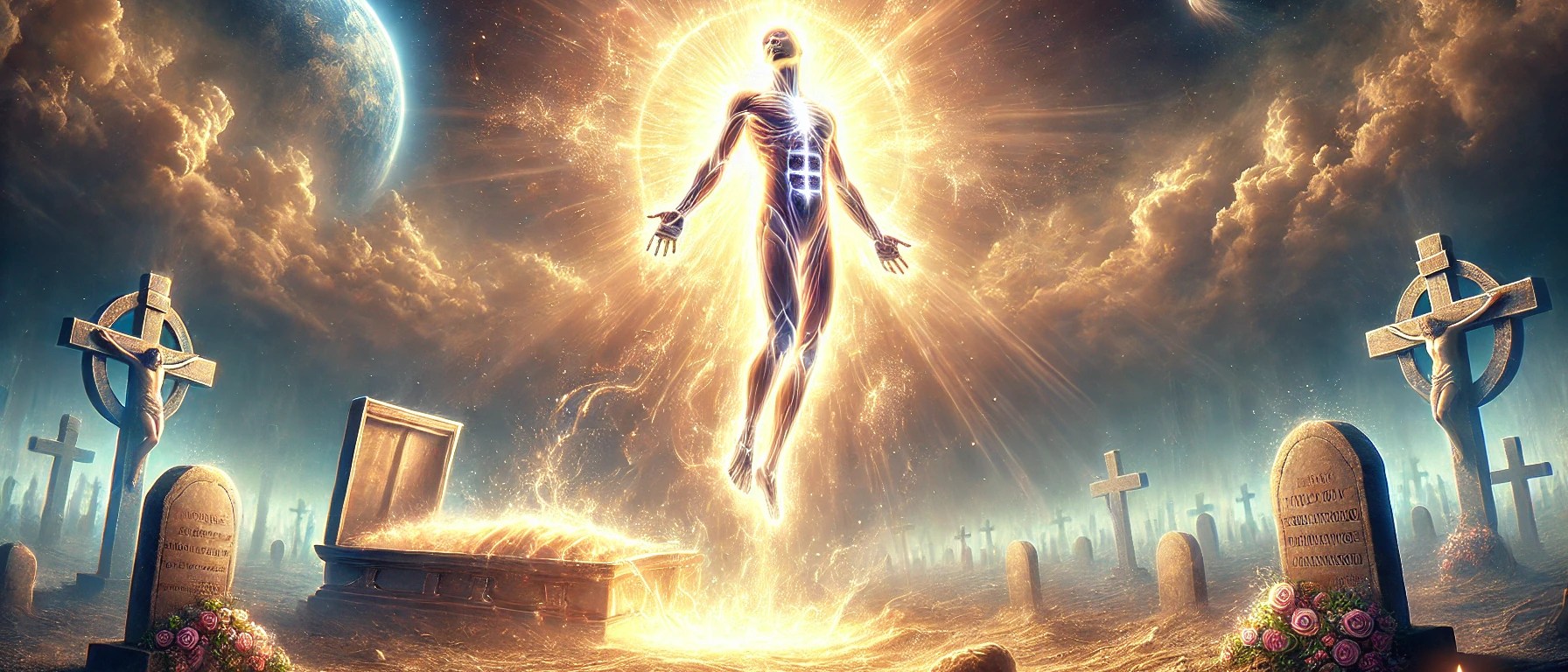
In a recent discussion with two dispensationalists, they argued that the “body of Christ” is Christ’s “spiritual body,” linking this idea to 1 Corinthians 12:11-27 and Ephesians 3:6, 4:4-16. They suggested that this is what Paul means by “spiritual bodies” in 1 Corinthians 15:40-44 and what Christ meant when He said we will be like the angels (referencing Matthew 22:23-34, Mark 12:18-27, and Luke 20:27-40).
40 There are also heavenly bodies and earthly bodies, but the glory of the heavenly is one, and the glory of the earthly is another. 41 There is one glory of the sun, and another glory of the moon, and another glory of the stars; for star differs from star in glory.
42 So also is the resurrection of the dead. It is sown a perishable body, it is raised an imperishable body; 43 it is sown in dishonor, it is raised in glory; it is sown in weakness, it is raised in power; 44 it is sown a natural body, it is raised a spiritual body. If there is a natural body, there is also a spiritual body.
However, there are several issues with this interpretation:
i) Metaphor for the Church: In 1 Corinthians 12 and Ephesians, Paul uses the term “body” metaphorically to describe the Church and how its members have different roles. The purpose in 1 Corinthians 12 is to discuss the use of spiritual gifts, while in Ephesians, the metaphor is used to illustrate the unity of Jew and Gentile in Christ. This metaphorical use of “body” in these passages should not be conflated with Paul’s discussion of “spiritual bodies” in 1 Corinthians 15, where the context is the resurrection of the dead.
ii) Nature of Glorified Bodies: The idea that our glorified bodies are merely the “body of Christ” in the sense of the Church is far from what Paul and the rest of Scripture describe. If we are to have bodies like Christ’s glorified body, as Paul indicates in Philippians 3:21, are we to believe that these bodies are made up of other bodies? This seems to confuse the metaphorical use of “body” for the Church with the physical reality of our future glorified bodies. Additionally, it’s important to note that Jesus was physically raised from the dead (Luke 24:39), emphasizing that resurrection involves the transformation of our physical bodies, not the creation of a purely spiritual entity.
iii) Contradiction in Terms: The dispensationalist view creates an unnecessary contradiction. It implies that a “spiritual body” is both physical and non-physical at the same time and in the same way. However, Jesus made a clear distinction between “spirits” and “bodies” in Luke 24:39, where He explicitly stated that a spirit does not have flesh and bones as He does after His resurrection. This distinction underscores the physical nature of the resurrection body, which is not merely a spiritual or non-corporeal entity.
iv) Consistent Reading: If we consistently read Paul’s use of “spiritual body” with the dichotomy of body/spirit in mind, it becomes clear that the spiritual body is contrasted with the natural body. This does not mean we are physically raised as spirits, but rather that our bodies, while still physical, will be transformed and fully animated by the Spirit in a way that transcends our current mortal existence. Moreover, figures like Enoch and Elijah were taken up to heaven (Genesis 5:24; 2 Kings 2:11), and there is no indication that they exist merely as incorporeal spirits. Their translation to heaven suggests a continuity of their physical existence, further supporting the idea of a physical resurrection.
v) Hermeneutical Concerns: It’s not good hermeneutics to force a debate about the immaterial soul and the body in a text that isn’t discussing that topic. As Ciampa and Rosner explain in their commentary:
“The next antithesis Paul provides has been the cause of great confusion in the history of interpretation as the polarity of Paul’s own theology has been interpreted through the prism of ontological polarities of later periods of history. Paul says that the human body is sown a natural body, it is raised a spiritual body. In the modern, post-Enlightenment context, the words natural and spiritual are often taken, popularly at least, to suggest a distinction between the material and immaterial, or between the physical and the spiritual (so NRSV). But scholars have pointed out that the material/immaterial dichotomy is a modern one and that in Paul’s world soul and spirit were not considered to be immaterial but of a lighter, thinner material than visible stuff. Still, people thought of matter in terms of very different categories of physicality, in a way that approximated the modern physical/spiritual dichotomy. But in such dichotomies both of the words Paul employs here would normally be used to refer to the thinner, invisible kinds of stuff.
The word translated natural is the adjective form of the word ‘soul’ or ‘life’ (thus BDAG indicates that the adjective means ‘of the soul/life’). The scriptural basis for Paul’s word choice here is given in the following verse when he quotes Genesis 2:7 in a modified form. There Adam is described as a ‘living being/soul.’ Paul contrasts ‘natural’ or ‘soulish’ people with ‘spiritual’ people in 2:14–15, and, as Wright points out, he is certainly not dealing with a distinction between people who are physical and people who are not! Rather, Paul’s usage suggests a distinction between people who ‘are living at the level of life common to all humankind’ versus those who ‘are indwelt, guided and made wise by the creator’s Spirit.’ In this passage as well the distinction has to do with the difference between ordinary human life and life empowered by God’s Spirit. The adjectives Paul uses describe ‘not what something is composed of, but what it is animated by. It is the difference between speaking of a ship made of steel or wood on the one hand and a ship driven by steam or wind on the other.’ Wright follows Hays in pointing to the helpfulness of the Jerusalem Bible’s translation of the verse: ‘When it is sown it embodies the soul, when it is raised it embodies the spirit. If the soul has its own embodiment, so does the spirit have its own embodiment.’
Elsewhere Paul’s language reflects what is called inaugurated eschatology, including the idea that Christians have already begun to experience the blessings and realities of the last days, including the Spirit, such that they may be called ‘spiritual.’ Here, however, for the sake of the point he wants to make about the radical contrast between the two types of bodies, he describes a strict dichotomy between the life animated by the soul, or ordinary human life, and life fully animated by God’s Spirit, which are two mutually exclusive experiences. To live in a resurrected body is to experience a new mode of existence, life directed and empowered by the Spirit, suitable to the age to come, in a body untainted by sin and death in any sense.
As Wright suggests, Paul’s reference to a spiritual body appears to be ‘the most elegant way he can find of saying both that the new body is the result of the Spirit’s work (answering ‘how does it come to be?’) and that it is the appropriate vessel for the Spirit’s life (answering ‘what sort of a thing is it?’)” (Ciampa & Rosner, 2010, pp. 816-818).
Paul’s contrast in 1 Corinthians 15 is not about material versus immaterial but about life animated by the soul versus life animated by the Spirit. The “spiritual body” is not non-physical; rather, it is a physical body transformed by the Spirit, suited for the new creation. This interpretation aligns with the broader biblical witness, affirming the physical resurrection of believers, like that of Christ, and does not reduce our future glorified state to mere incorporeal existence.
vi) Flesh and Blood Shall Not Inherit the Kingdom: Some may argue that when Paul says “flesh and blood cannot inherit the kingdom of God” (1 Corinthians 15:50), it implies that our resurrection bodies will not be physical. However, this interpretation misses Paul’s point. The phrase “flesh and blood” is a common biblical idiom that refers to human beings in their current, corruptible, mortal state—affected by sin and subject to death. Paul is not denying the physical resurrection of the body; rather, he is affirming that our current bodies, which are perishable and tainted by sin, cannot enter into the kingdom of God. As he explains in the surrounding verses, our perishable, sinful bodies must be transformed into imperishable, glorified bodies that are no longer subject to sin, death, or decay. This transformation, not the rejection of physicality, is the key to inheriting the kingdom. Our resurrected bodies will be free from the effects of sin, fully empowered by the Spirit, and fit for eternal life in God’s presence.
vii) The Nature of Angels and Incorporeality: There is a common assumption that angels are purely incorporeal beings, based largely on philosophical traditions such as those of Augustine and Aquinas. However, this view is not without challenges. While angels are described as “spirits” in Hebrews 1:14, the Bible also records multiple instances where angels take on physical form, interact with the material world, and even perform physical tasks.
Angels Appearing in Physical Form: Scripture records several instances where angels take on physical form and interact with the material world. For example, in Genesis 18-19, angels visit Abraham and Lot, eat food, and physically rescue Lot’s family. This suggests that angels, while primarily spiritual beings, have the ability to assume tangible, physical forms. If they can interact physically with the world, it’s hard to argue that they are entirely incorporeal in every sense.
Angels as “Mighty Ones”: In 2 Samuel 24:16 and Revelation 18:1, angels are depicted as powerful beings capable of significant actions, such as delivering judgments or casting down entities. This implies that, while they may primarily exist in the spiritual realm, they are not necessarily bound to a purely non-material existence.
Jesus’ Use of Angels in Teaching: When Jesus refers to humans in the resurrection being “like the angels” (Matthew 22:30), He emphasizes that we will not marry, but this does not explicitly mean that angels are purely immaterial. It’s reasonable to think Jesus is pointing to their heavenly function or state rather than making a direct comment on their physicality.
Incorporeality Is Not a Clear Doctrine: The argument for angels being purely incorporeal stems more from philosophical tradition, particularly from thinkers like Augustine and Aquinas, who drew on Neoplatonic ideas about immaterial beings. The Bible itself does not definitively teach that angels are purely immaterial. Rather, it presents them as beings who, though spiritual, are capable of physical manifestations and actions.
Moreover, Jesus’ statement in Matthew 22:30 that in the resurrection, humans will be “like the angels” refers primarily to the fact that we will not marry, rather than making a claim about the physicality or incorporeality of angels. If angels can interact with the physical world, it is hard to assert definitively that they are purely incorporeal in every sense. Figures like Enoch and Elijah, who were taken up to heaven without tasting death, are also examples of human beings who were translated bodily into God’s presence. These examples suggest that corporeality and physical resurrection are not necessarily incompatible with existence in the spiritual realm.
In conclusion, while angels are primarily spiritual beings, the Bible does not clearly teach that they are purely incorporeal. They appear capable of assuming physical forms when necessary, and the nature of their existence remains a subject of theological debate. Likewise, the resurrection bodies believers will receive are not merely “spiritual” in the sense of being non-physical; they will be glorified, imperishable bodies, freed from sin and death, yet still physical in nature.
It seems you are pointing out an important distinction about immateriality. If something is truly immaterial and yet takes up space, then it raises the question of whether it’s truly immaterial. This is an important nuance when discussing angels or spiritual beings that might interact with the physical world or appear in physical forms. Here’s how this idea might fit into the overall discussion:
viii) We Will Be Like Christ: The Bible explicitly teaches that believers will be made like Jesus in His resurrection (Philippians 3:21; 1 John 3:2). Jesus was physically raised from the dead, and He had a glorified body that could be touched and seen (Luke 24:39-43; John 20:27). He could interact physically with His disciples, eat food, and yet His body was transformed and imperishable, no longer subject to sin or death. If we are to be like Jesus, then our resurrection bodies will also be physical, transformed to be imperishable and free from sin, but still tangible and material.
This truth strongly affirms that when Jesus said we would be “like the angels” (Matthew 22:30), He was not implying that we would become immaterial beings. Instead, the context is about being like the angels in not marrying or dying. The resurrection promises a physical body, just like Christ’s glorified body, where believers will live eternally in a transformed, sinless state. This confirms that the biblical teaching on resurrection does not involve becoming purely spiritual or incorporeal, but rather transformed physical bodies fit for eternal life in God’s presence.
ix) The Nature of Immateriality and Space: Additionally, it is important to clarify the concept of immateriality when discussing angels or spiritual beings. If something is truly immaterial, then it should not take up space or have physical dimensions. If angels, for example, are considered immaterial yet appear physically, interact with the world, or occupy space, then it suggests we are not dealing with a purely immaterial being. Instead, what we may be encountering is a spiritual entity capable of manifesting in tangible, physical ways—meaning it can take on physical attributes without losing its spiritual essence. This distinction is key when interpreting biblical texts that depict angels or spiritual beings as interacting physically with the world.
Thus, the biblical portrayal of angels and spiritual beings, along with the resurrection body of Christ, supports the view that immateriality in Scripture does not exclude the possibility of physical interaction or the assumption of physical forms. This reinforces the conclusion that our future glorified bodies, like Christ’s, will be physical yet free from the constraints of corruption and death.
 The Council